
HEADER PHOTO BY vapae staffVAPAE’s Courses
Below are VAPAE’s courses and course descriptions offered for the 2026 - 2027 school year.
Fall 2026
-
Hands-on experiential study centers on exploration of facilitation methods using body, and building mind-body awareness; and skills in using body and voice for more impactful and effective teaching, communicating, and connection. Facilitation viewed as action to create space for all in group to participate and feel included. Students build more internal confidence in their vocal and physical presence to lead groups diverse in disability, age, and other identity axes. Students also develop authentic persona that is comfortable being socially engaged activist, artist, coach, collaborator, leader, presenter, researcher, and teacher. Goal is to hone effective communication skills applicable in real life: nailing job interview, captivating audience as speaker, or holding students' attention. Activities include movement and vocalization exercises; individual presentations; weekly responses to readings, podcasts, and videos; discussion; self-reflection; and goal setting.
Christine Suarez, Lecturer
Kaufman TBD. Wednesdays, 6:00-8:30 PM
-
This course connects students with active community-based artists and youth workers who utilize socially engaged goals, principles, and practices. Through readings and investigations, students research and write a case study on an arts site employing these pedagogies and strategies. The course includes theoretical and experiential components, allowing students from all arts disciplines to explore socially engaged pedagogy and arts practice through various approaches such as readings, visual and audio documentation, discussions, research papers, oral presentations, and guest speakers.
Kaufman TBD. Mondays, 6 - 8:30 PM
-
Introductory course with focus on arts education for multiple publics in inner-city settings. Study of core issues in arts education, creativity, and social justice as students develop, implement, and assess original syllabi, lesson plans, and community learning projects for multiple publics in inner-city schools and arts organizations. Collaboration with partner schools in planning, teaching, and evaluation of arts education programs in dance, music, theater, and visual arts. Class is PTE restricted. Please apply for a PTE using the link below.
Dr. Lora Cawelti, Lecturer
Broad TBD. Tuesdays, 6:00-8:50 PM
-
Training and supervised practicum for advanced undergraduate students participating in Visual and Performing Arts Education minor. Students implement and evaluate original arts education programs under guidance of faculty members in small course settings.
Ayda Gragossian, Lecturer + Cora Miller Laszlo, Teaching Assistant
Broad 2101. Tuesdays, 6:00-8:50 PM
Additional VAPAE Courses
-
This course connects students with active community-based artists and youth workers who utilize socially engaged goals, principles, and practices. Through readings and investigations, students research and write a case study on an arts site employing these pedagogies and strategies. The course includes theoretical and experiential components, allowing students from all arts disciplines to explore socially engaged pedagogy and arts practice through various approaches such as readings, visual and audio documentation, discussions, research papers, oral presentations, and guest speakers.
-
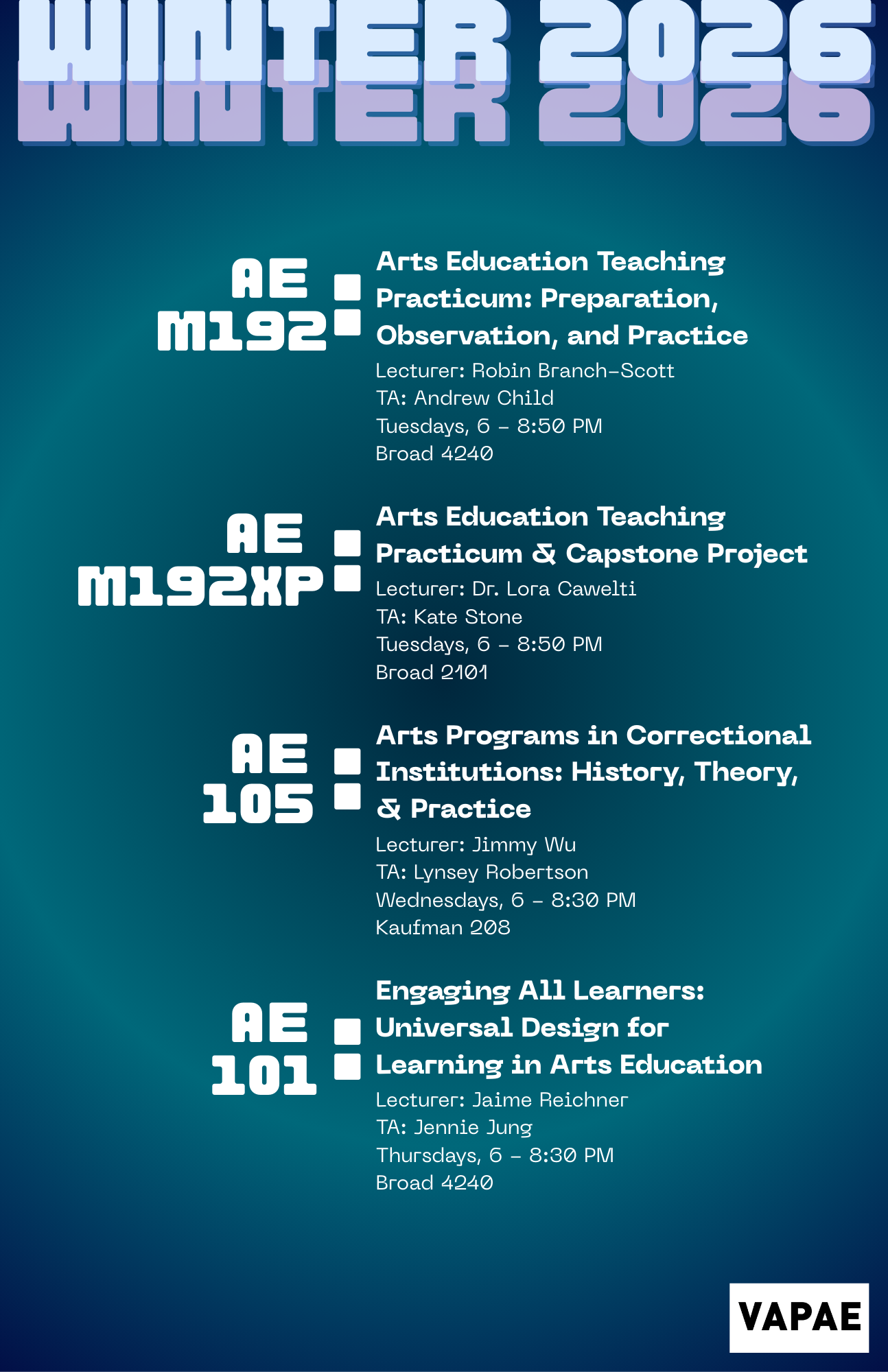
This course examines the landscape of arts programs for individuals and communities impacted by mass incarceration in the United States. Using a critical reading of the Prison-Industrial Complex, we survey a breadth of artistic projects and programming models currently taking place locally and nationally in collaboration with incarcerated populations, and explore how these programs support the positive transformation of individual and/or systemic traumas sustained as a result of our nation’s relationship to crime and incarceration. Students develop their own pedagogical understanding of best practices for teaching artists in the field, incorporating basic theories of Arts Education into original lesson plans that emphasize community, creativity, self-empowerment, and social justice.
-
This course focuses on Social Emotional Learning (SEL) to create an inclusive and caring classroom community where students thrive. Whether you aim to be a classroom teacher, arts specialist, or teaching artist, it is crucial to build a community where everyone feels known, seen, and heard. The arts serve as a vital entry point for fostering such a community and exploring social and emotional core competencies. By the end of the course, students gain a solid foundation in SEL theories and acquire strategies and activities for diverse participants in various settings. The course is tailored to align with students' backgrounds, interests, and career aspirations to ensure its relevance and usefulness.
-
This course equips visual artists with strategies, skills, and techniques to design and implement original visual arts lessons. Focusing on practical teaching strategies, it covers various materials and techniques such as drawing, painting, collage, printing, clay, and mixed media. Students will create diverse artworks, explore teaching in different settings, and develop effective management strategies. The course also includes designing and peer-teaching lessons, building a professional portfolio, and engaging with theoretical and practical readings for visual arts educators.
-
This course equips design/media arts students with teaching strategies, skills, and techniques to create and implement original lessons. Emphasizing practical classroom strategies, it covers areas such as graphic design, typography, animation, digital techniques, photography, filmmaking, and social media strategies. Students will complete various projects, explore different teaching settings, and develop management strategies. The course includes designing and peer-teaching lessons, building a professional portfolio, and engaging with theoretical and practical readings. Grading is based on participation, projects, community activities, lesson design, and student teaching, culminating in fully developed lesson plans.
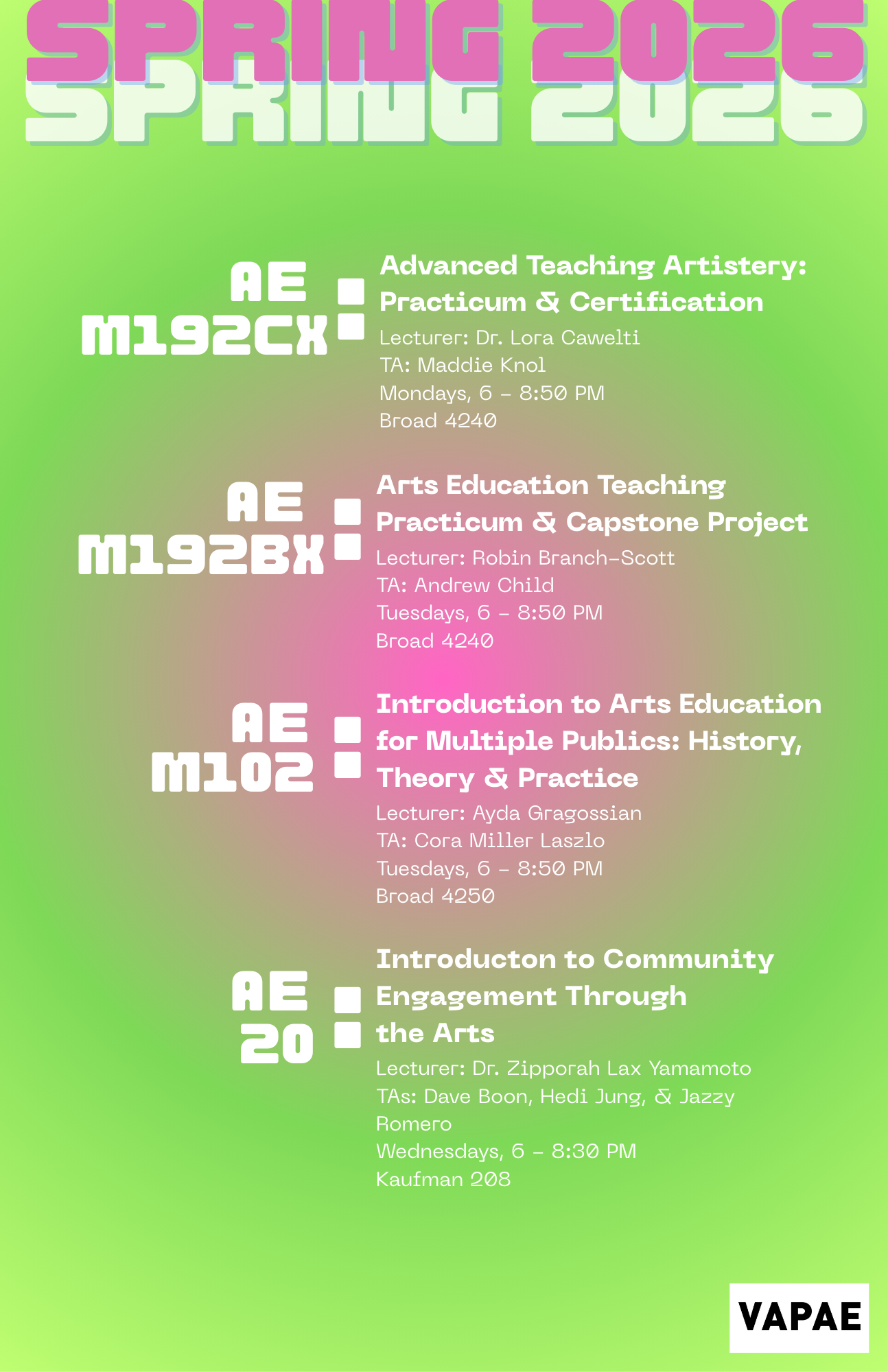
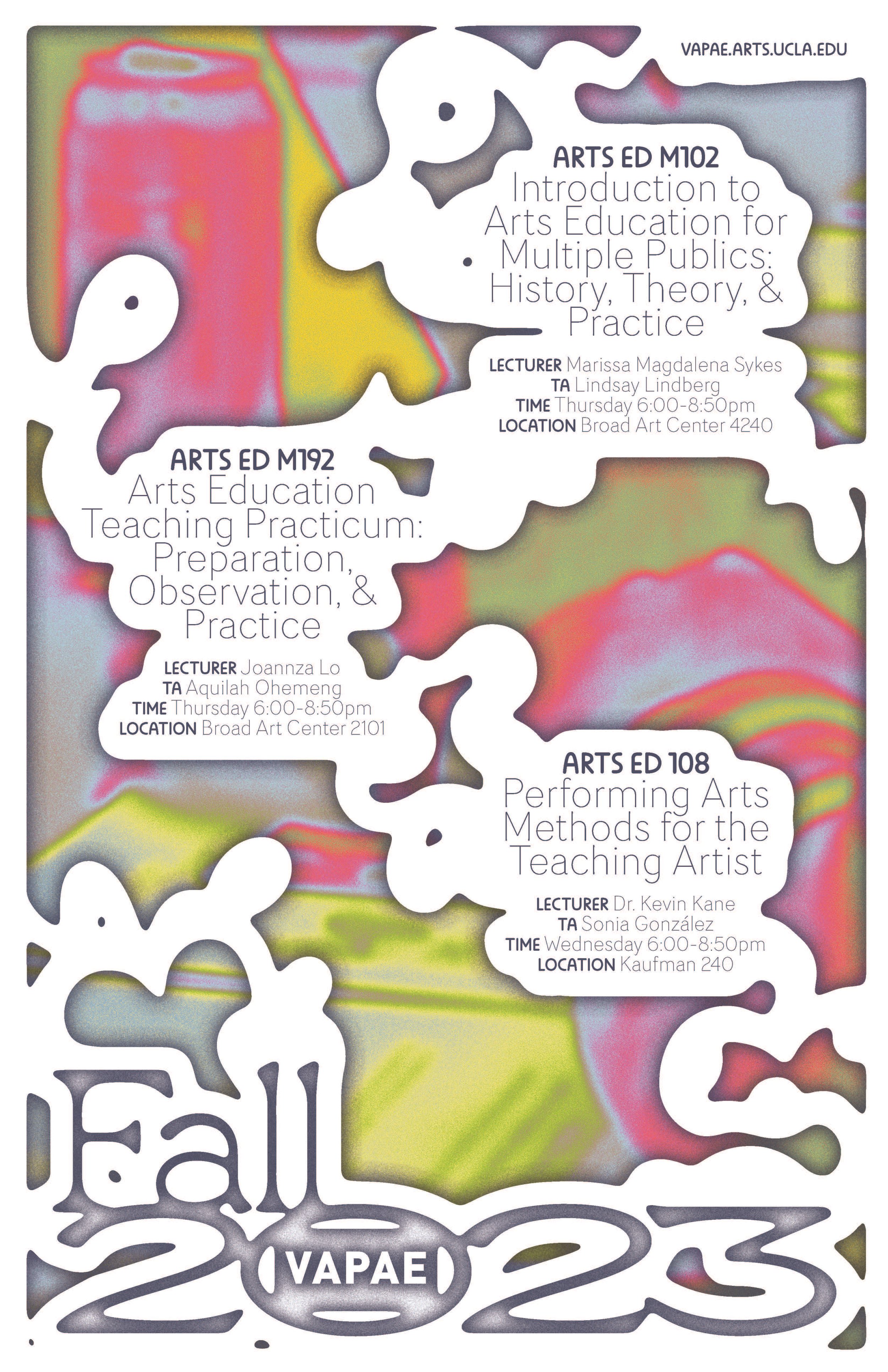
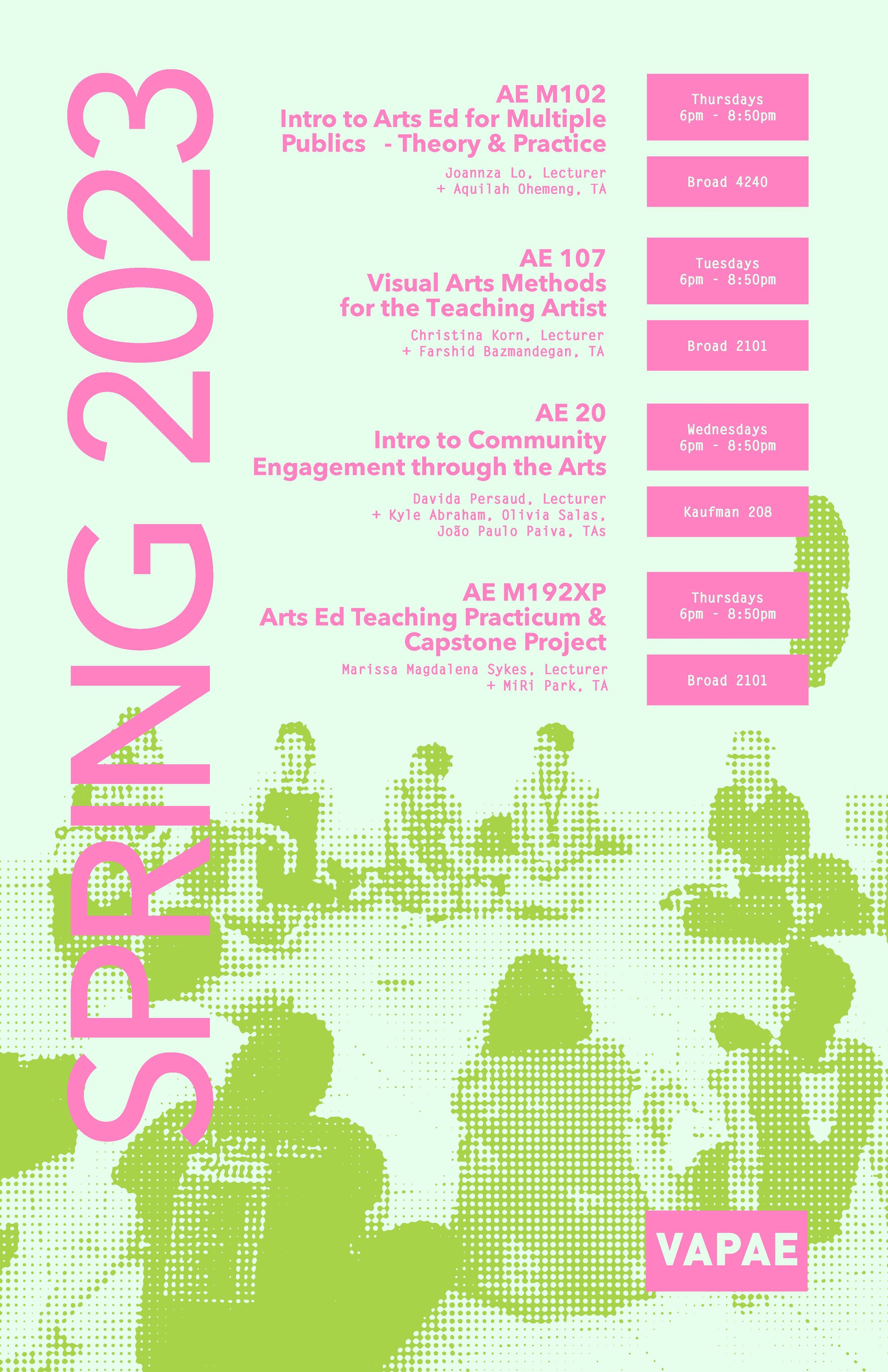
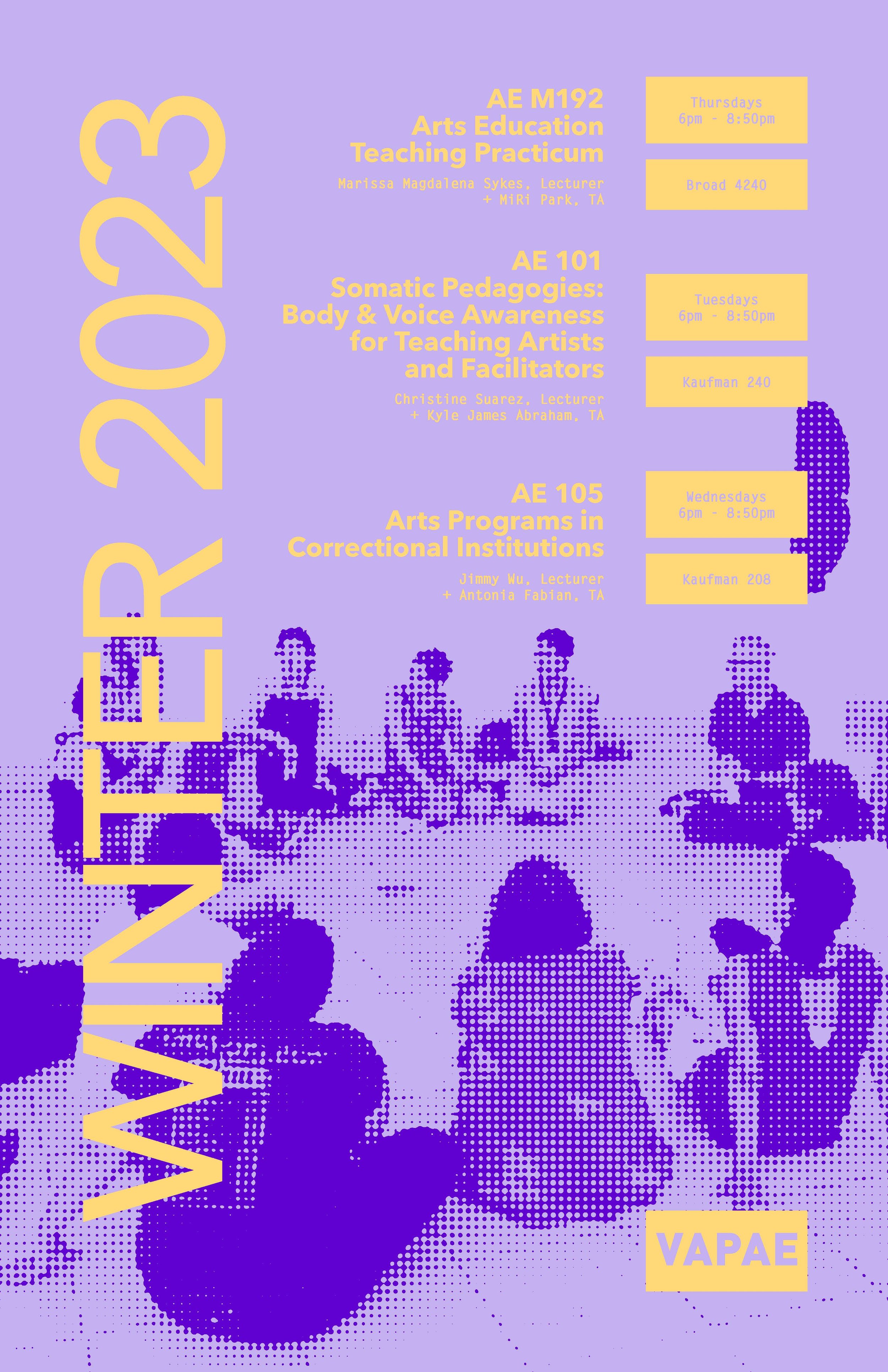
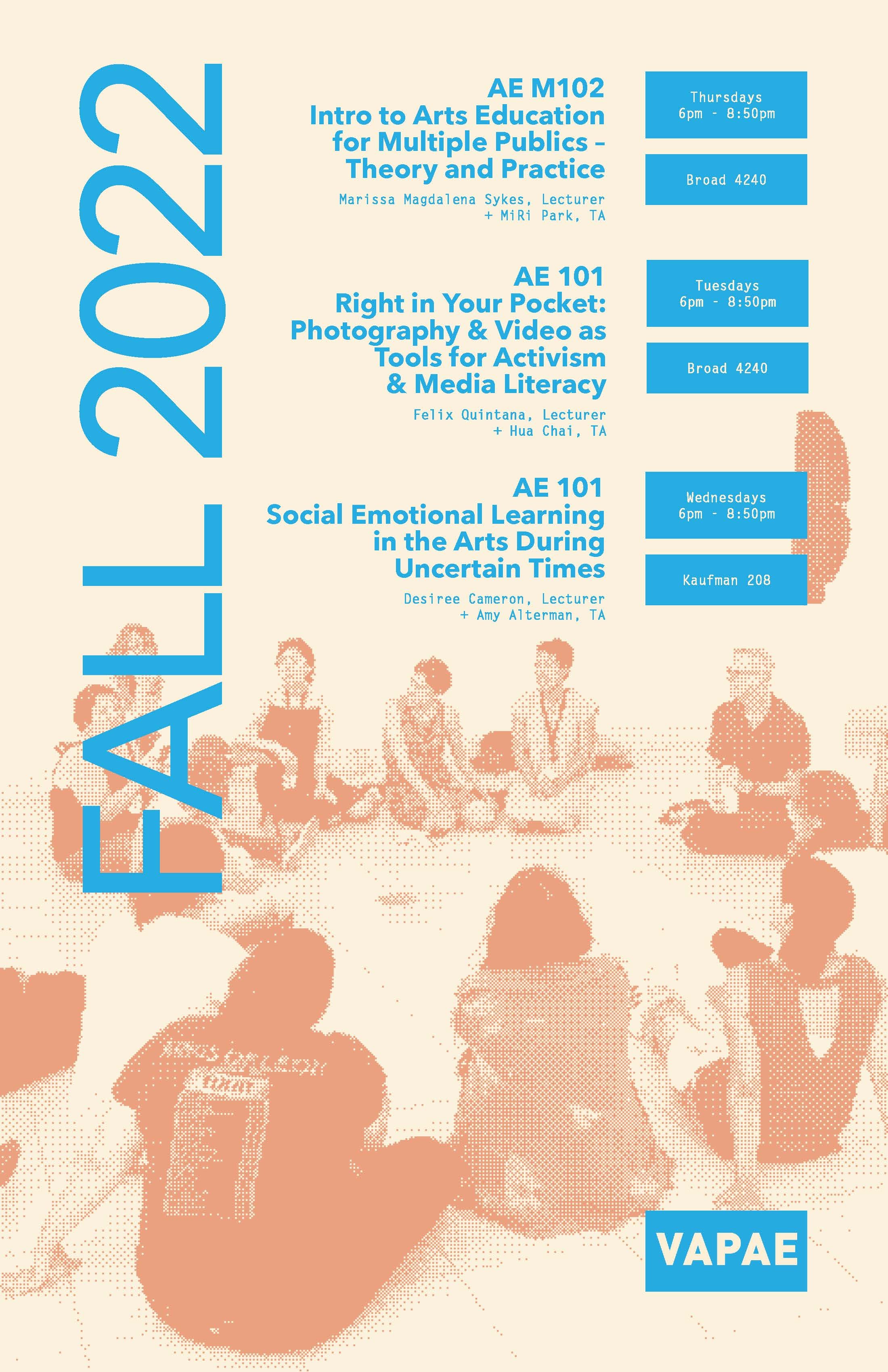
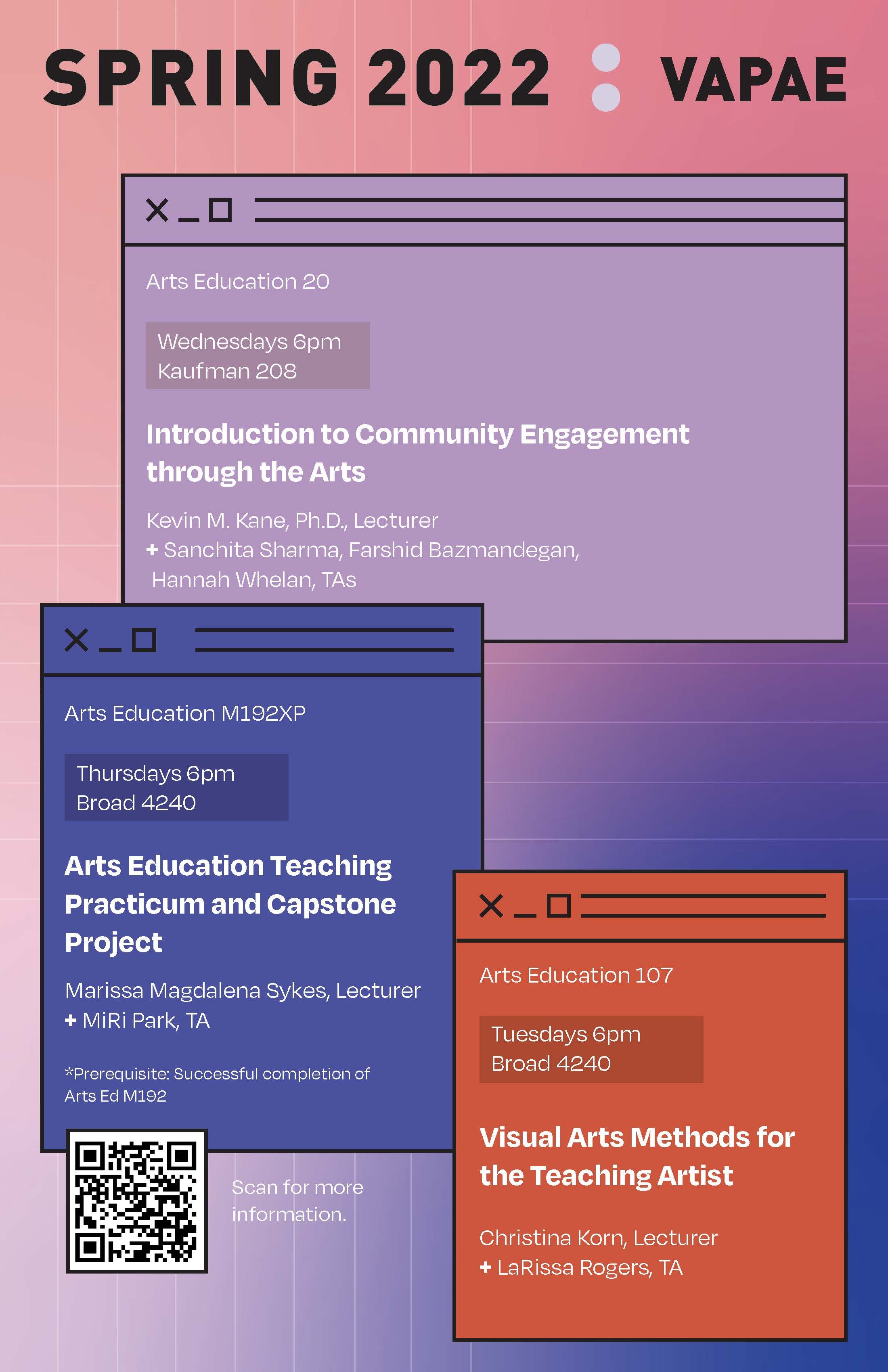
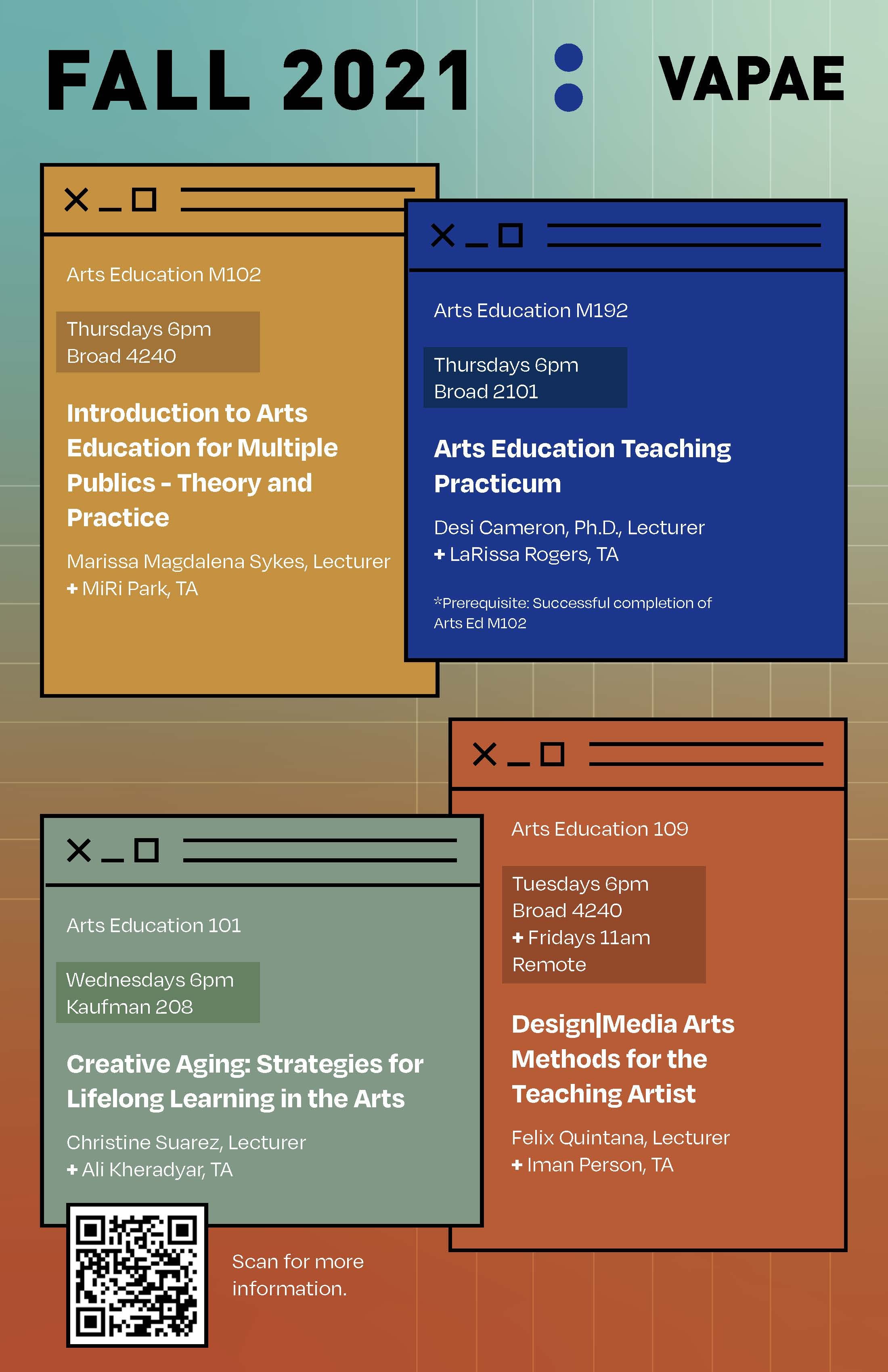
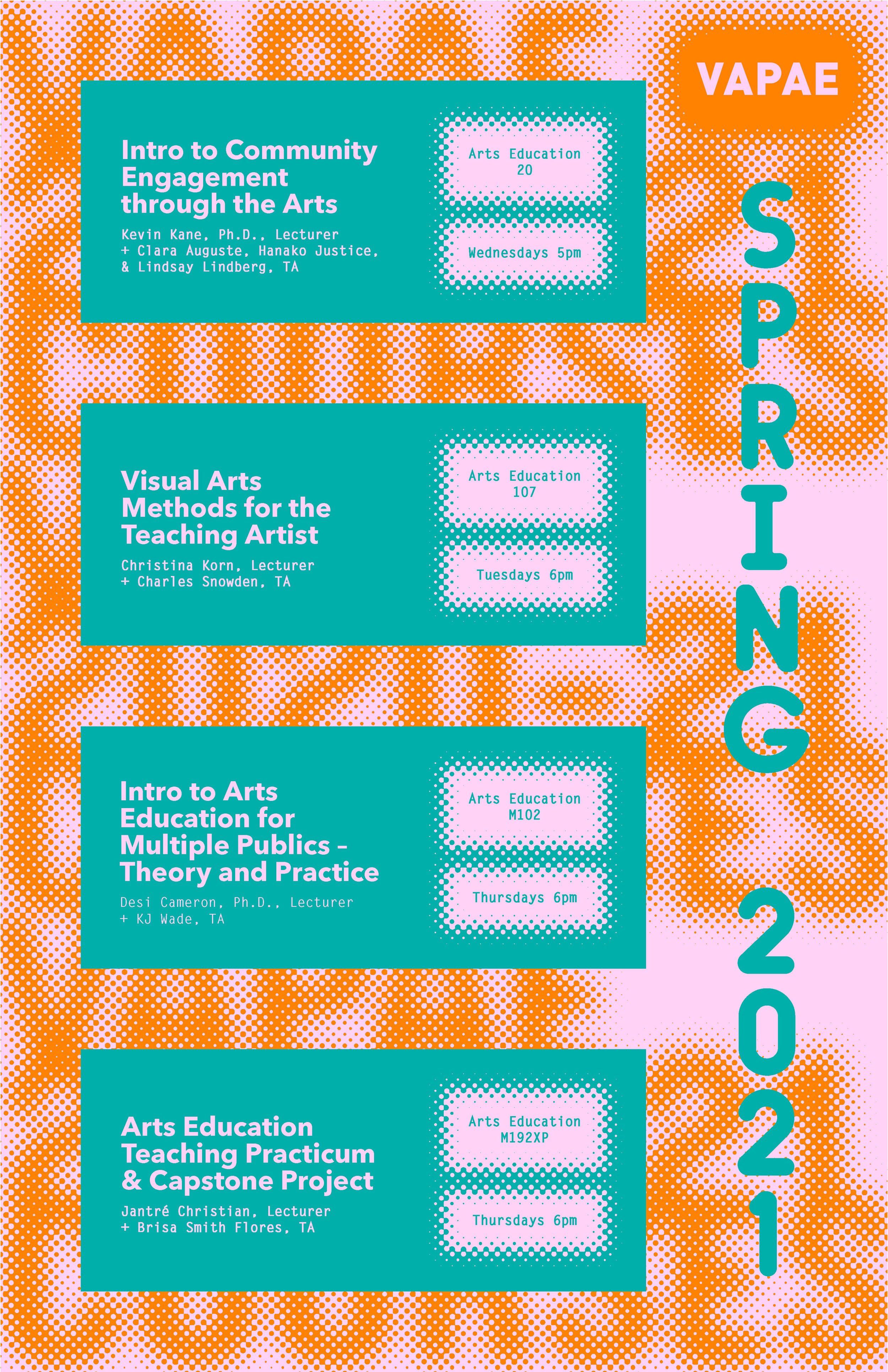
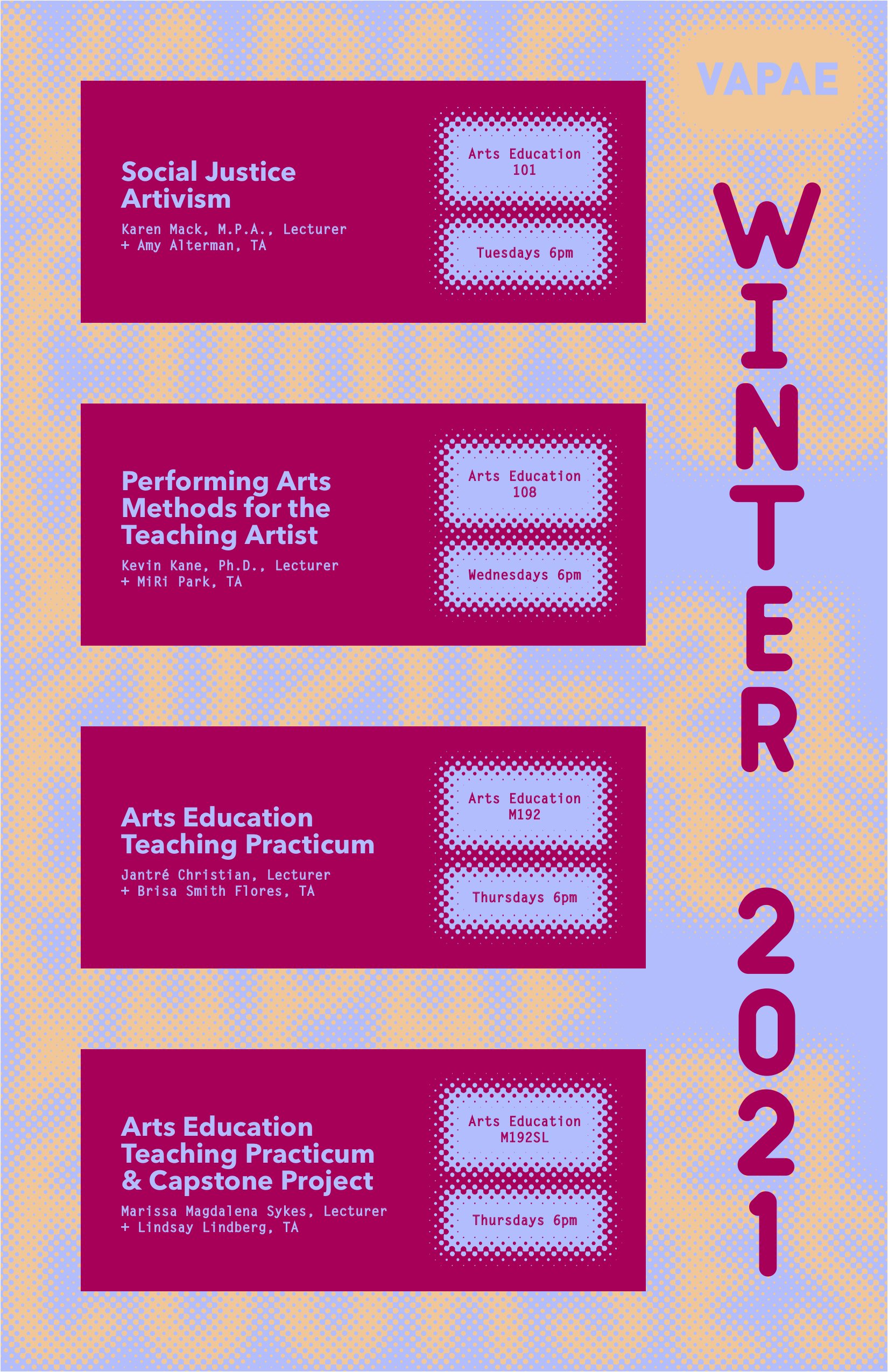
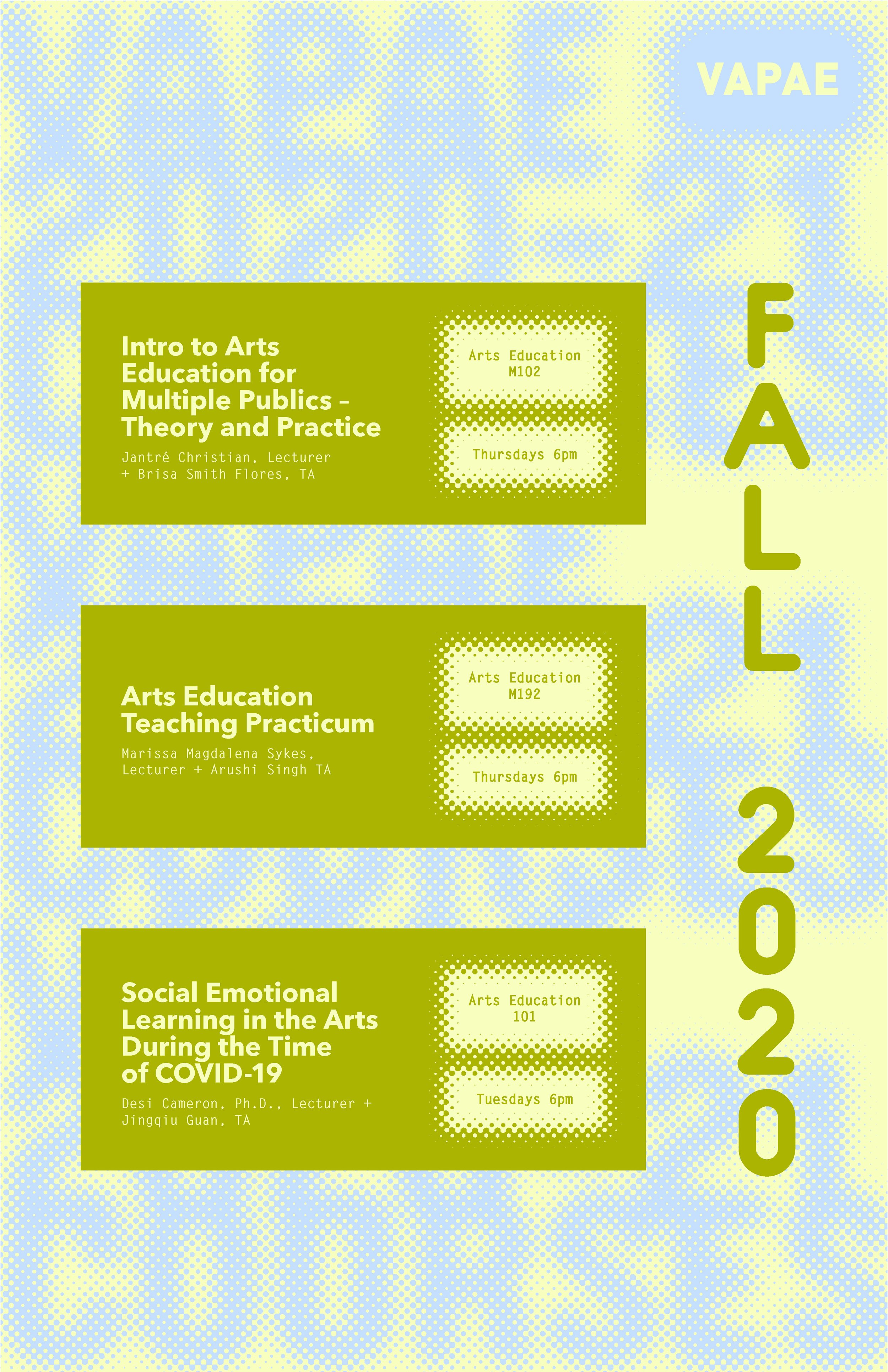
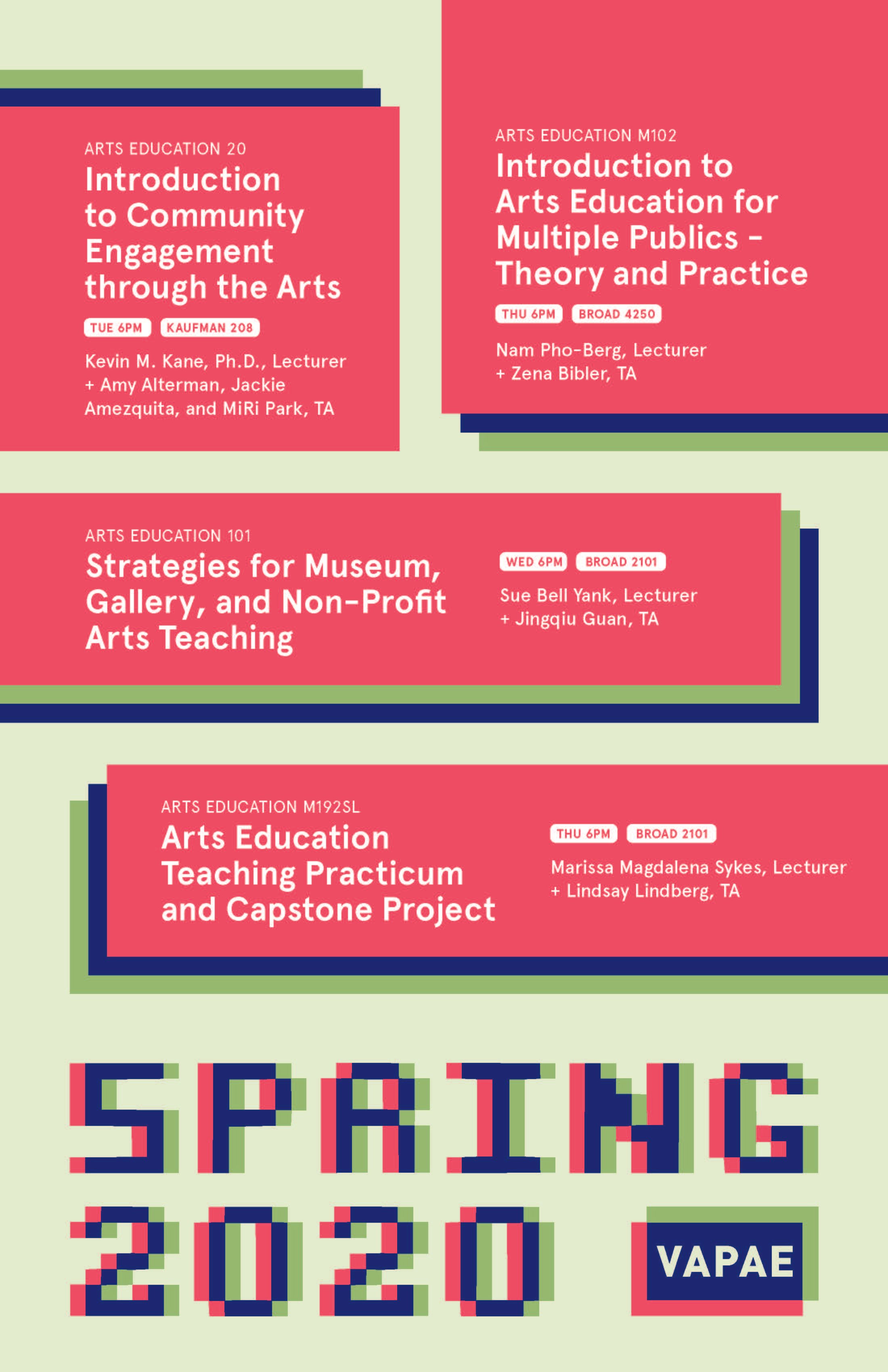
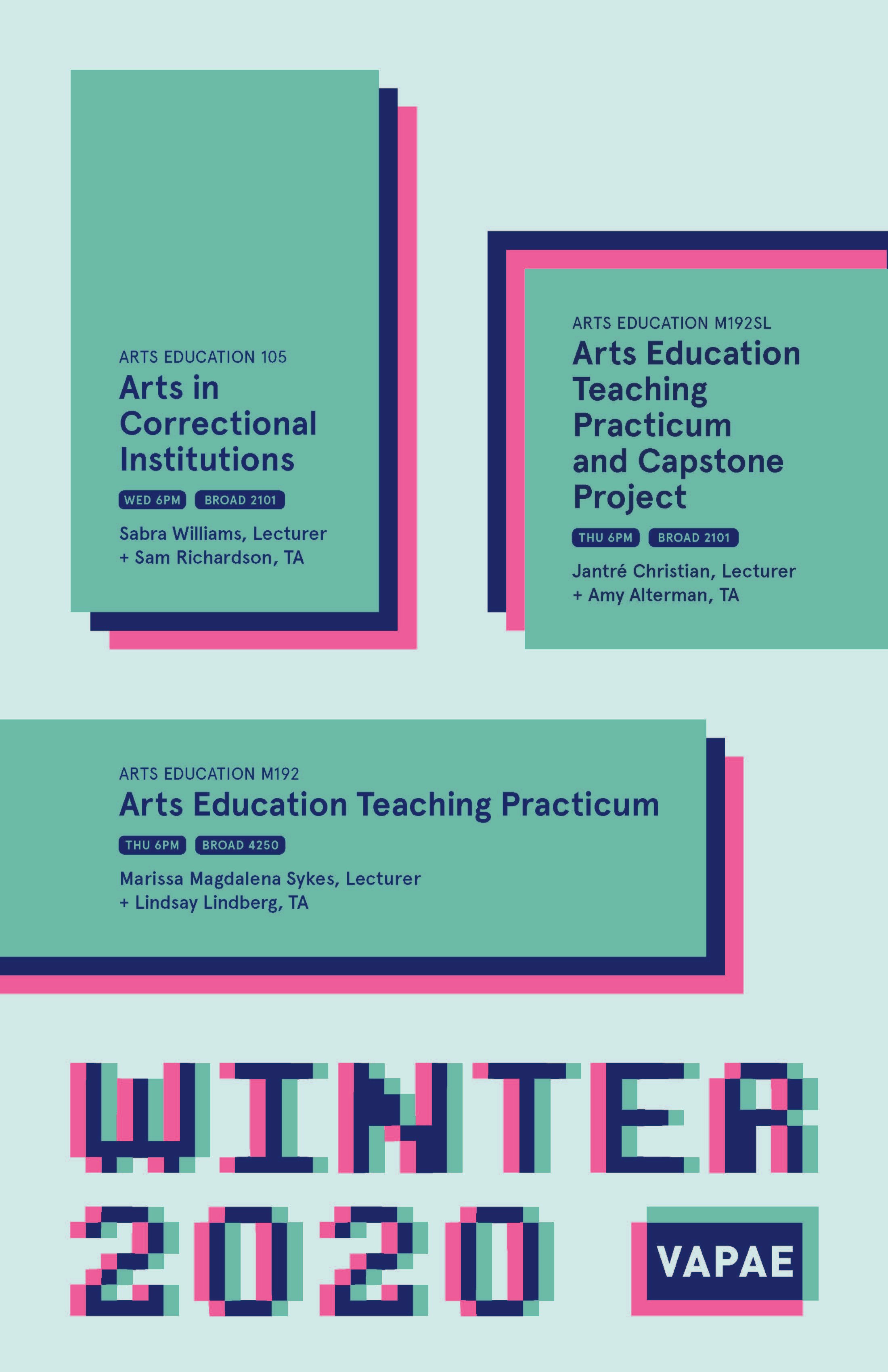
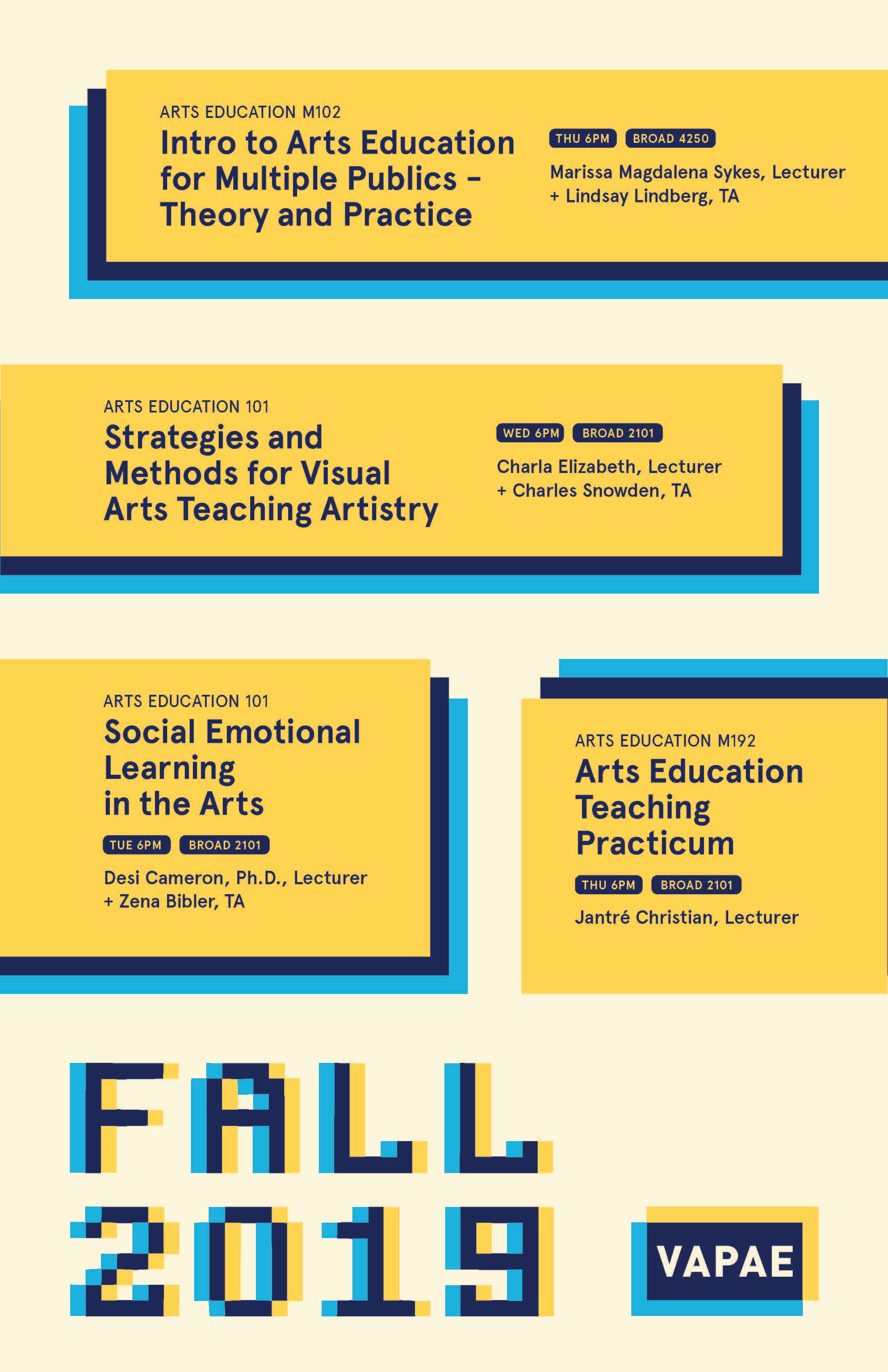
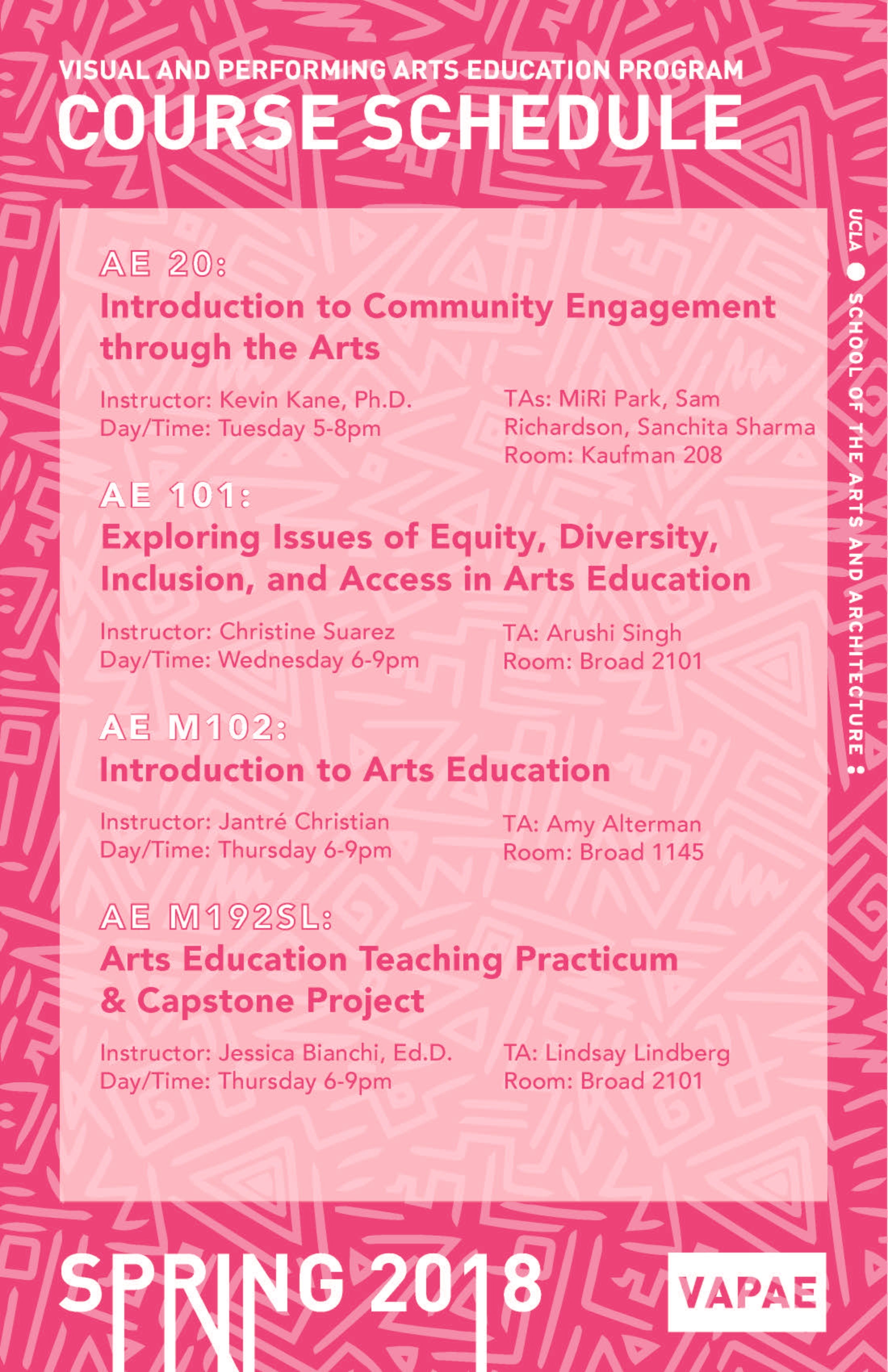
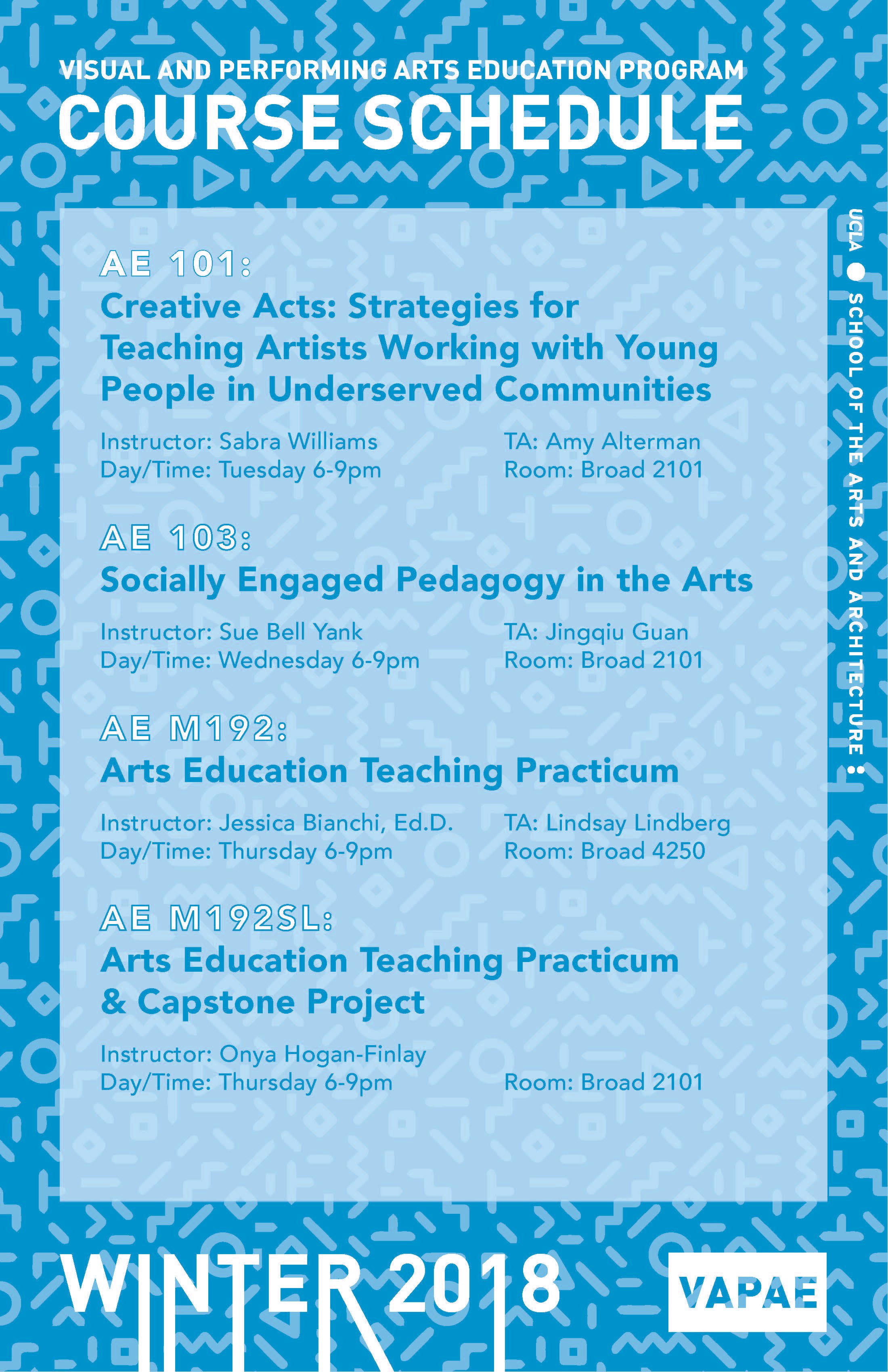
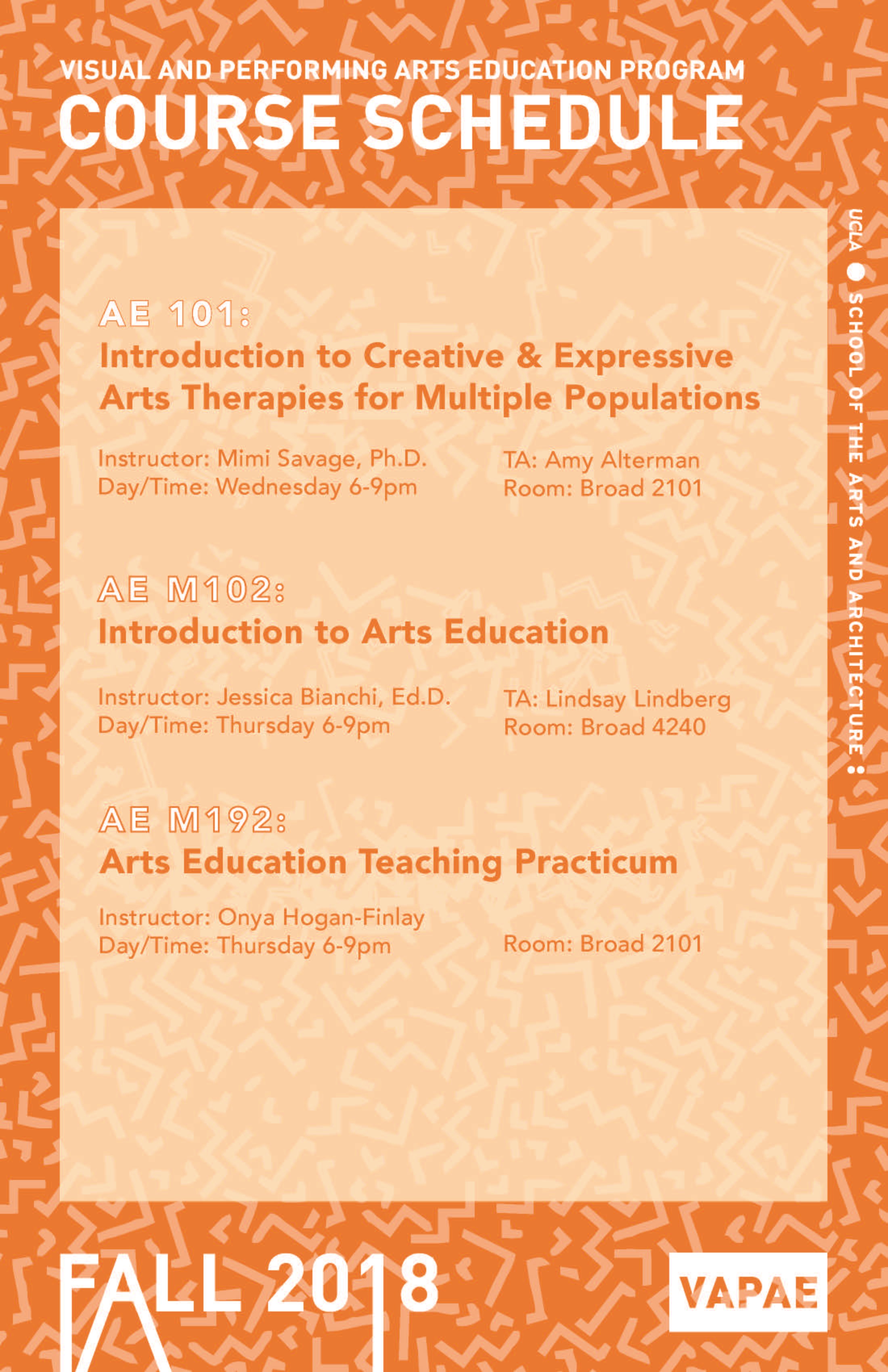
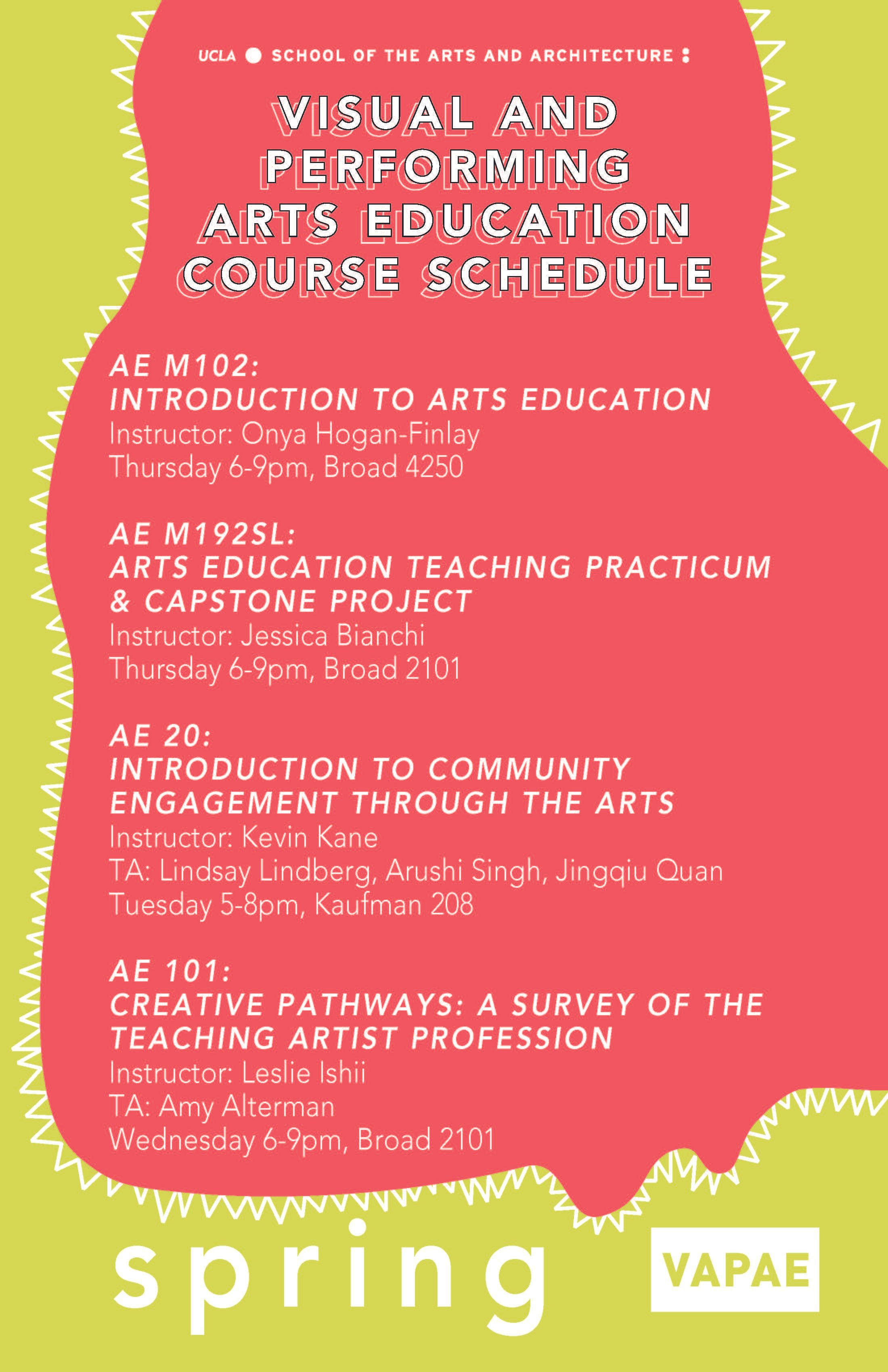
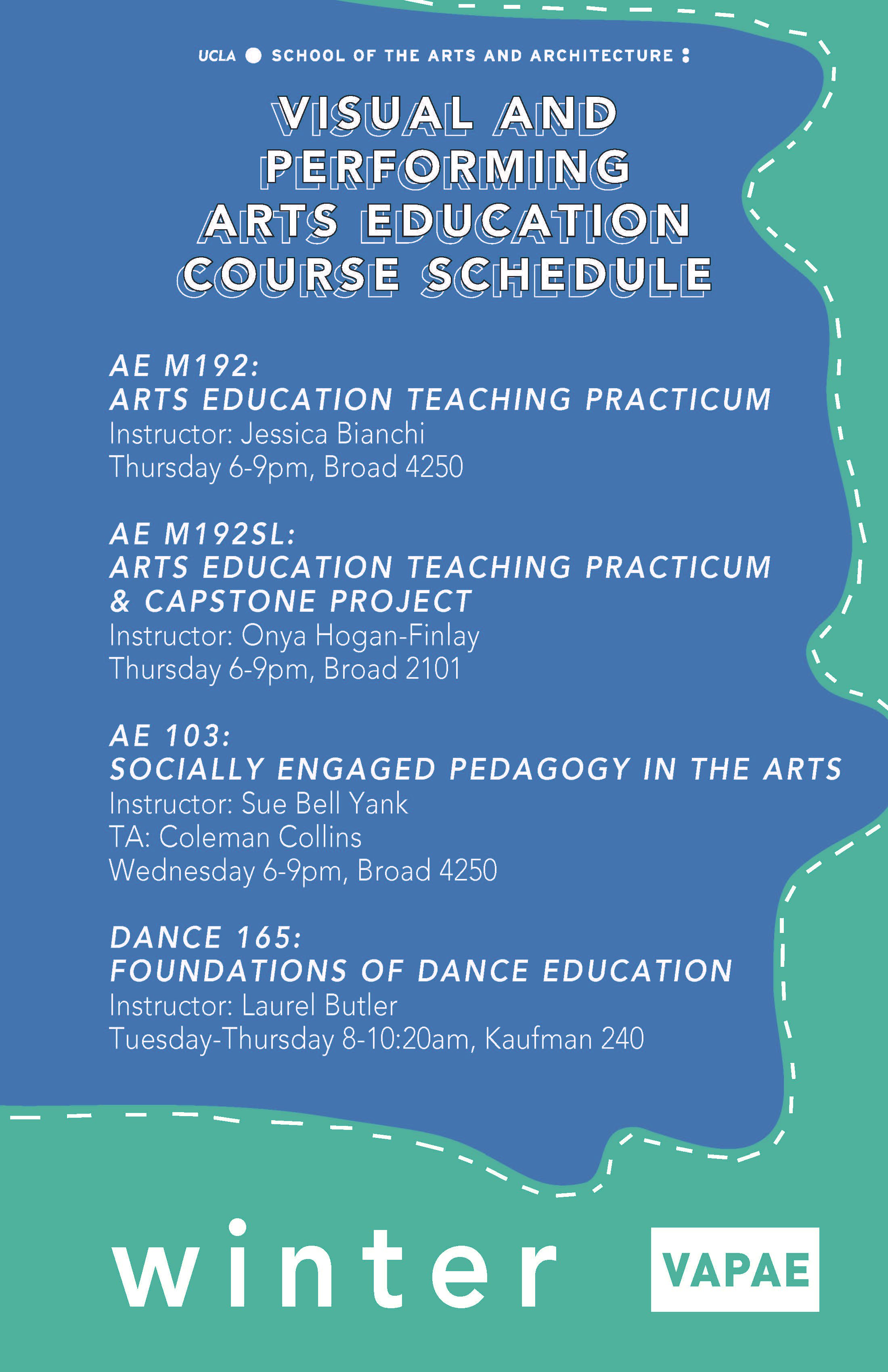
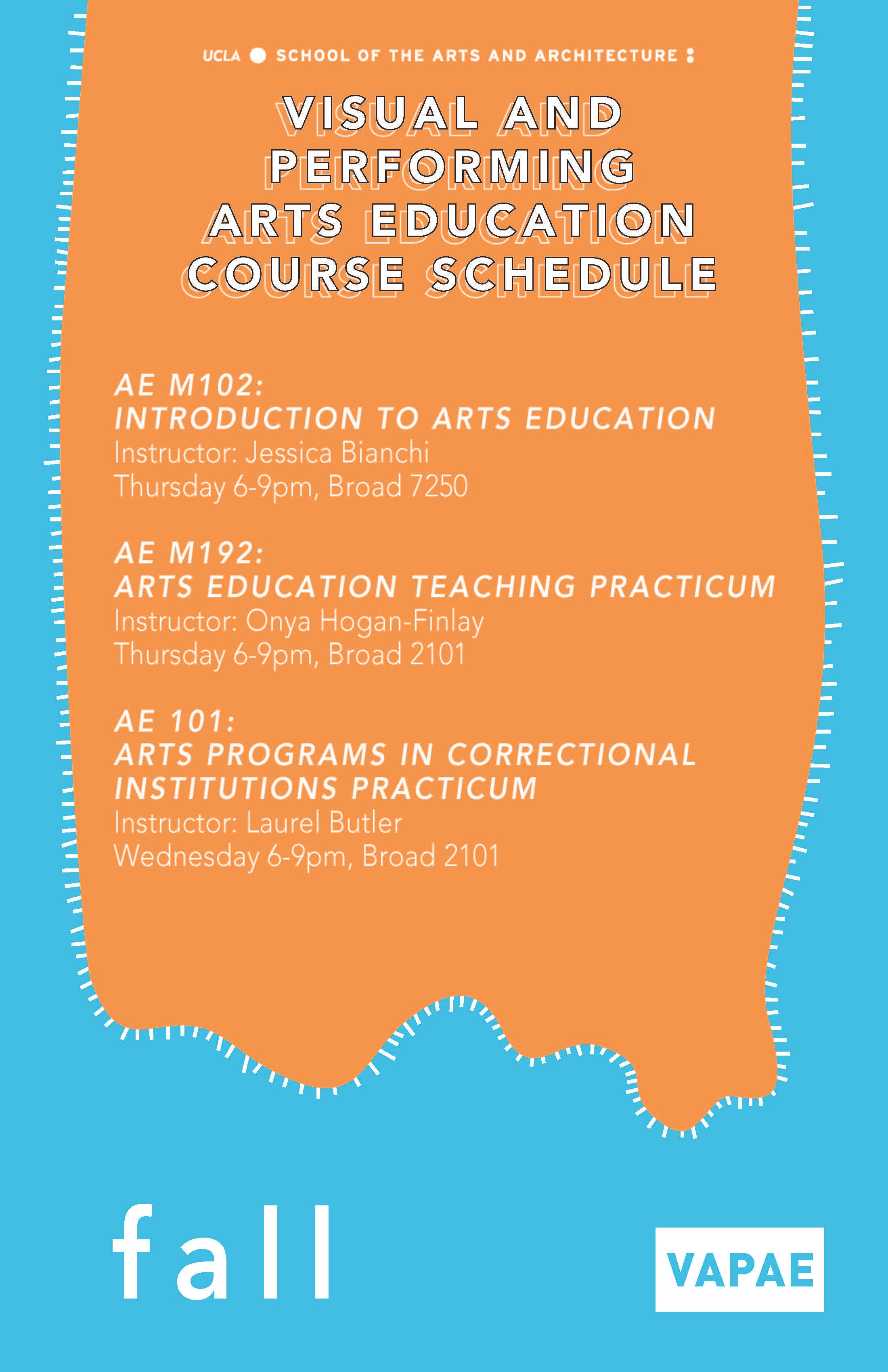
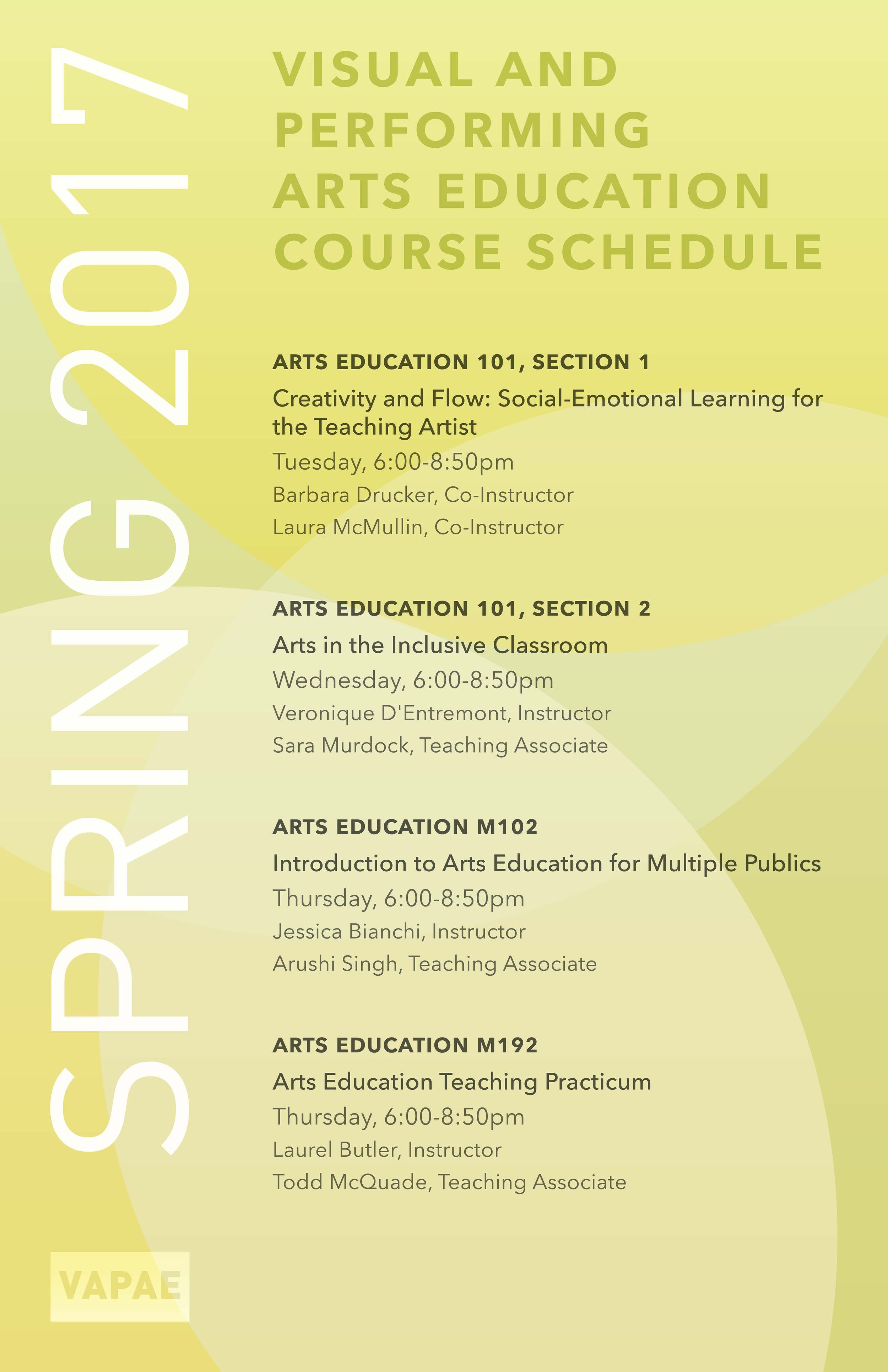
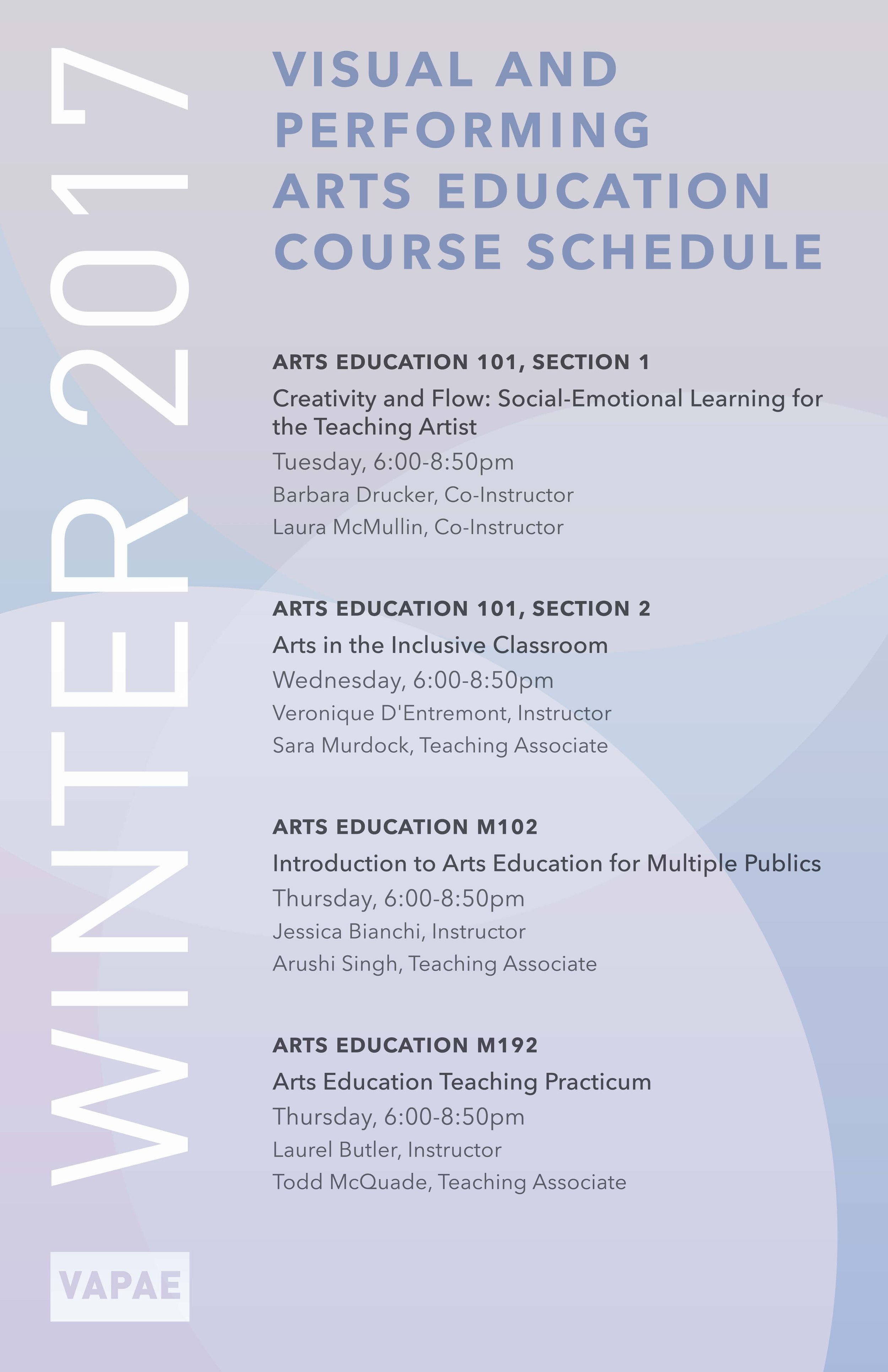
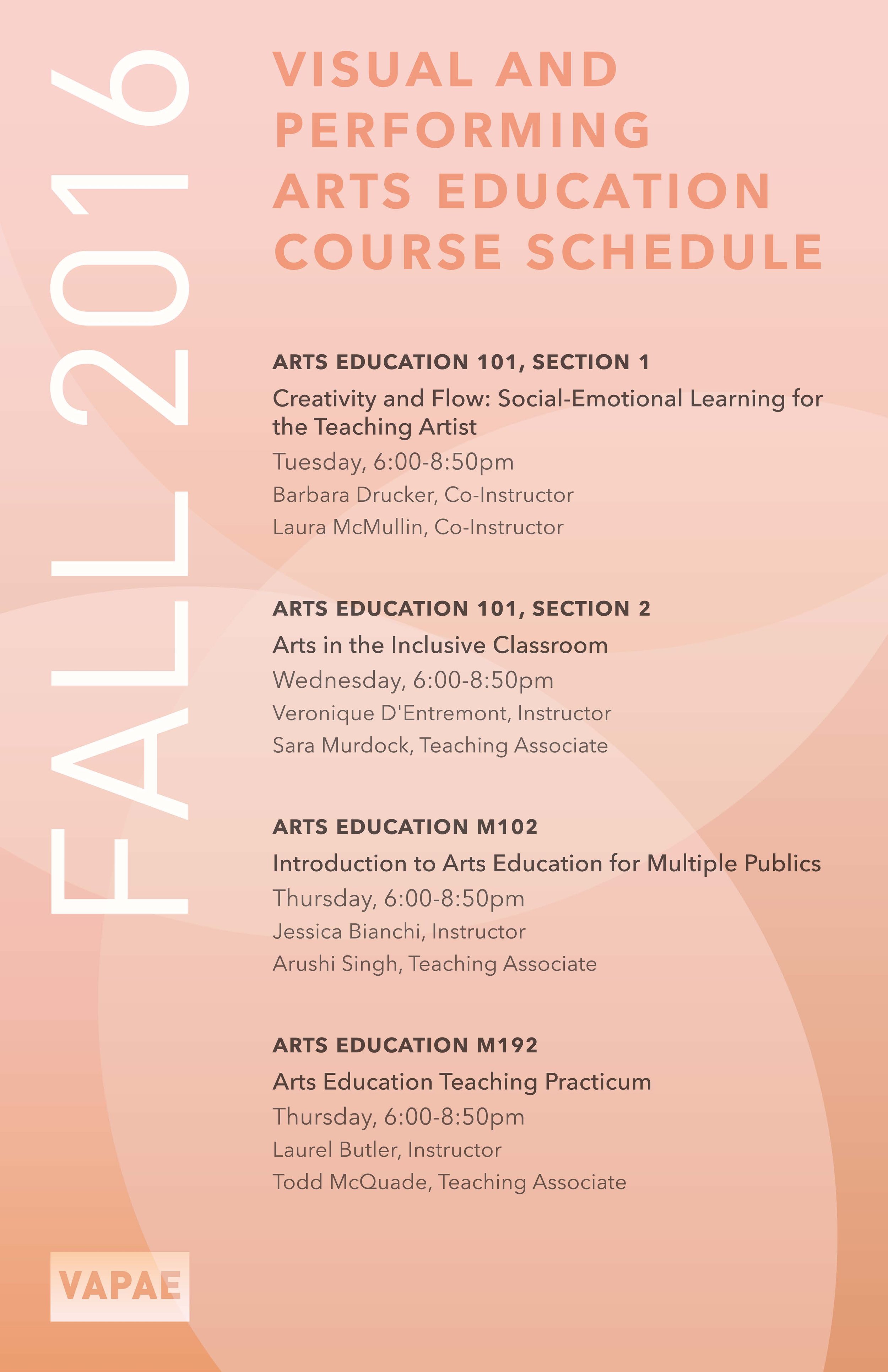
Annual Course Posters, 2016 - 2026
poster design by brian pea, jane kim, matthew broking, maria vasquez, amorette muzingo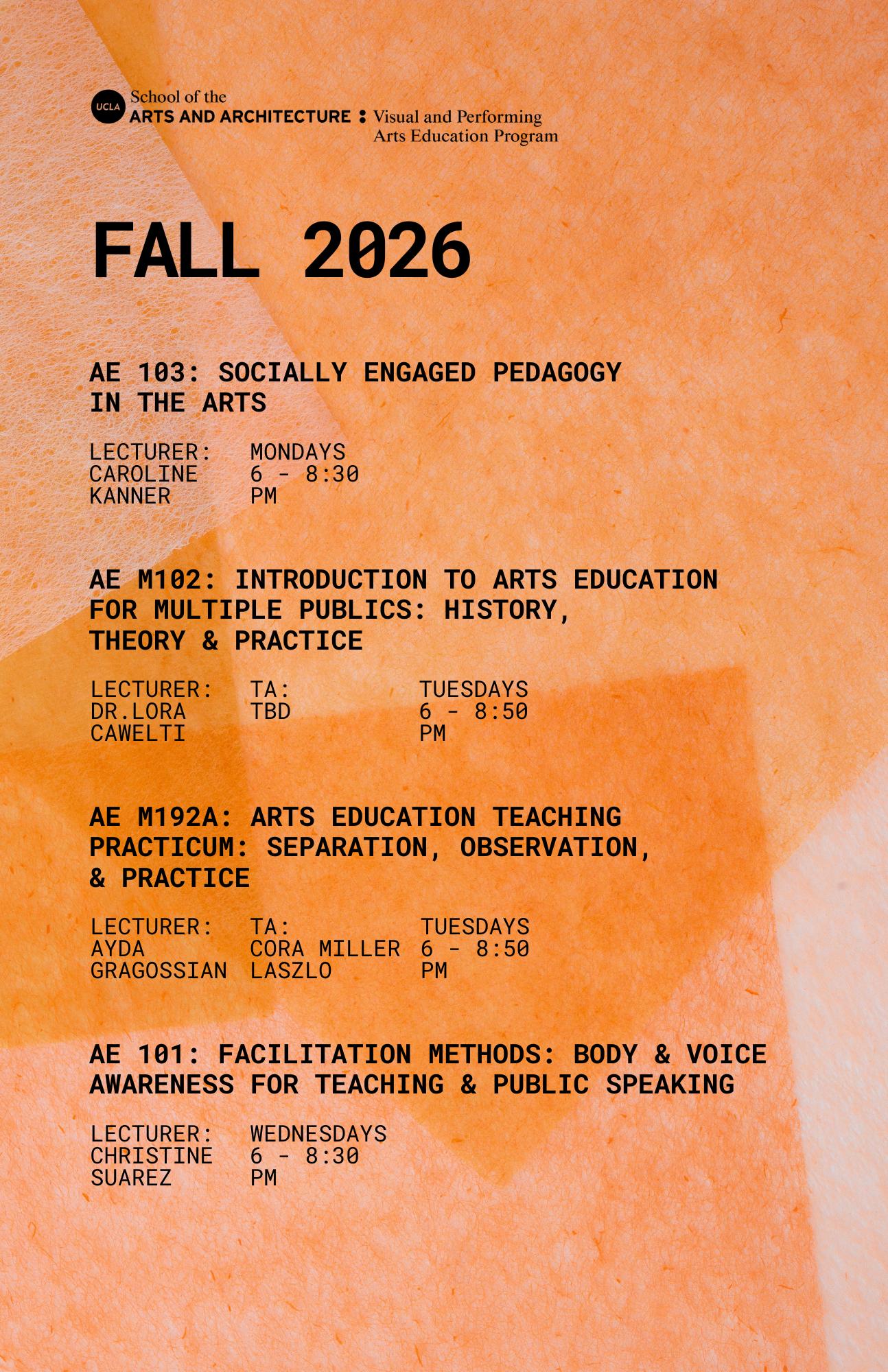
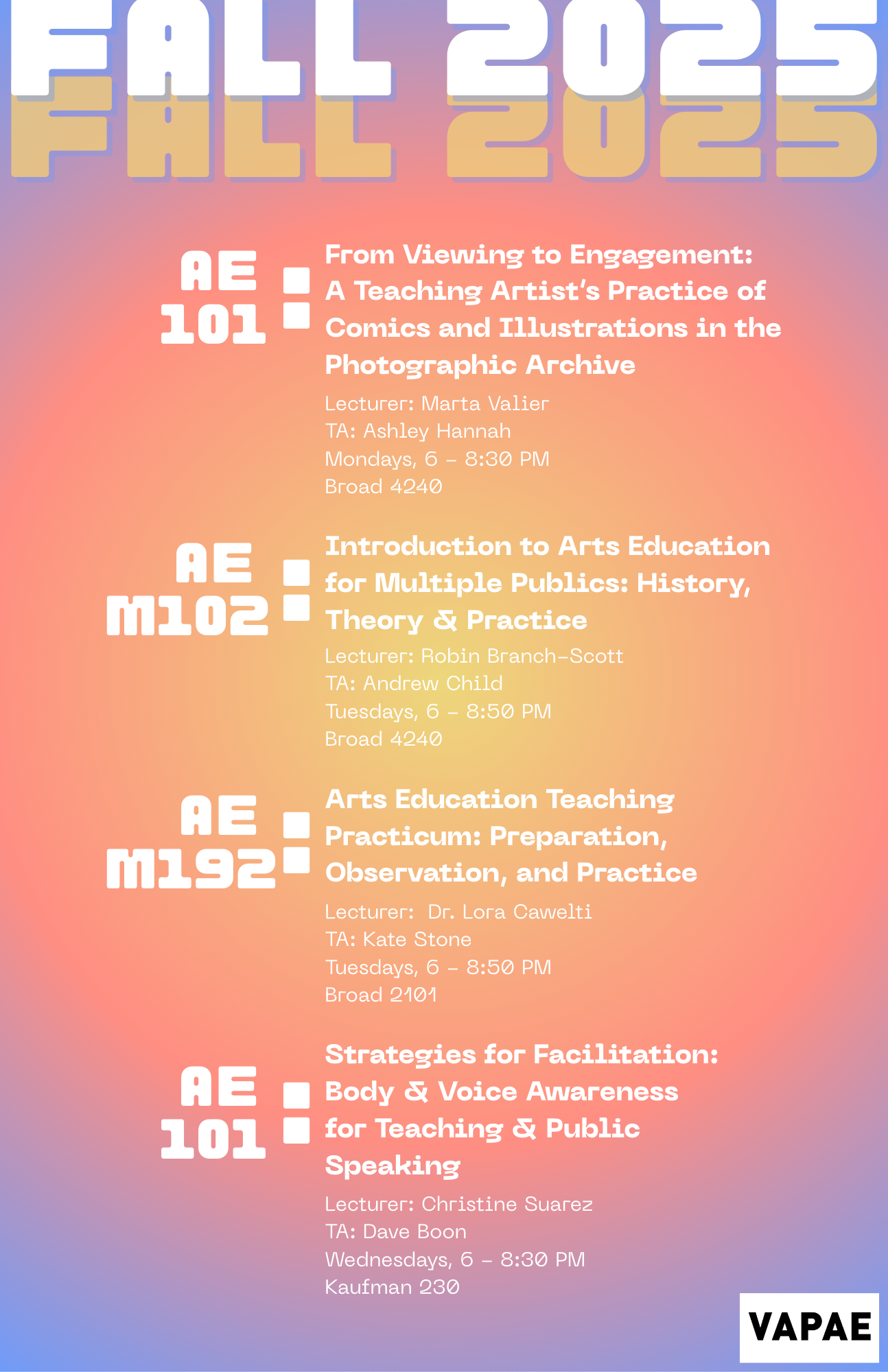
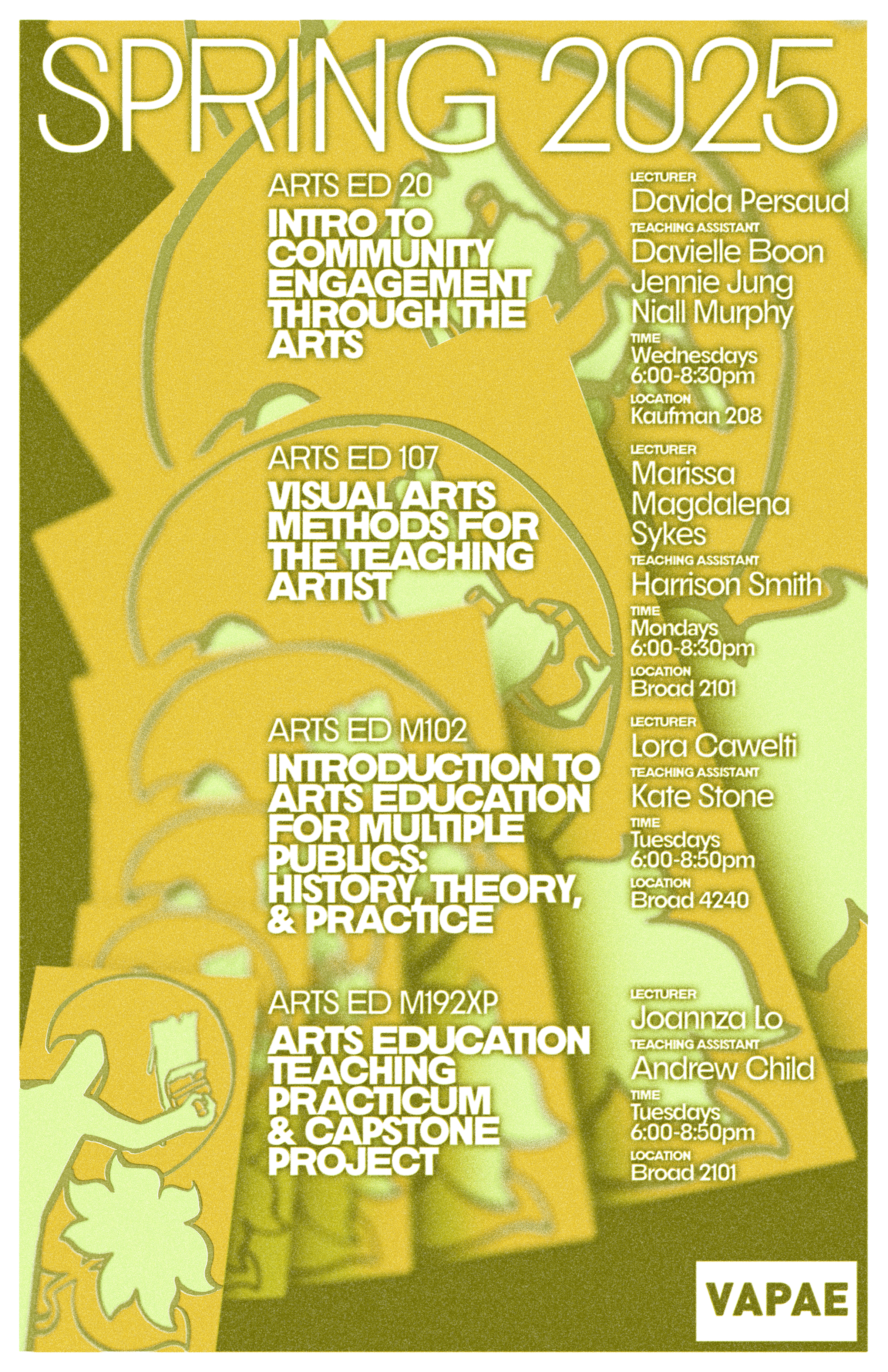
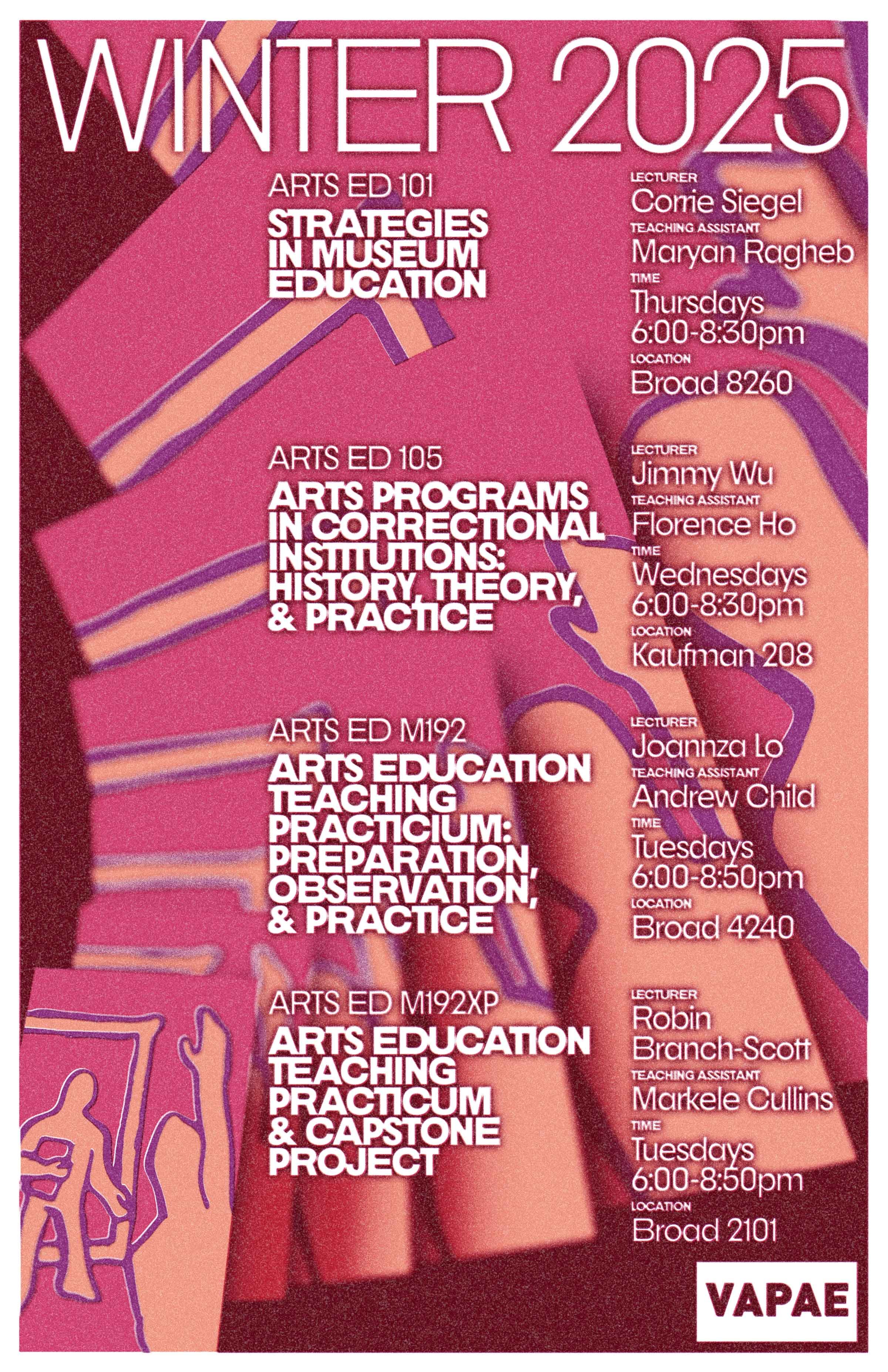
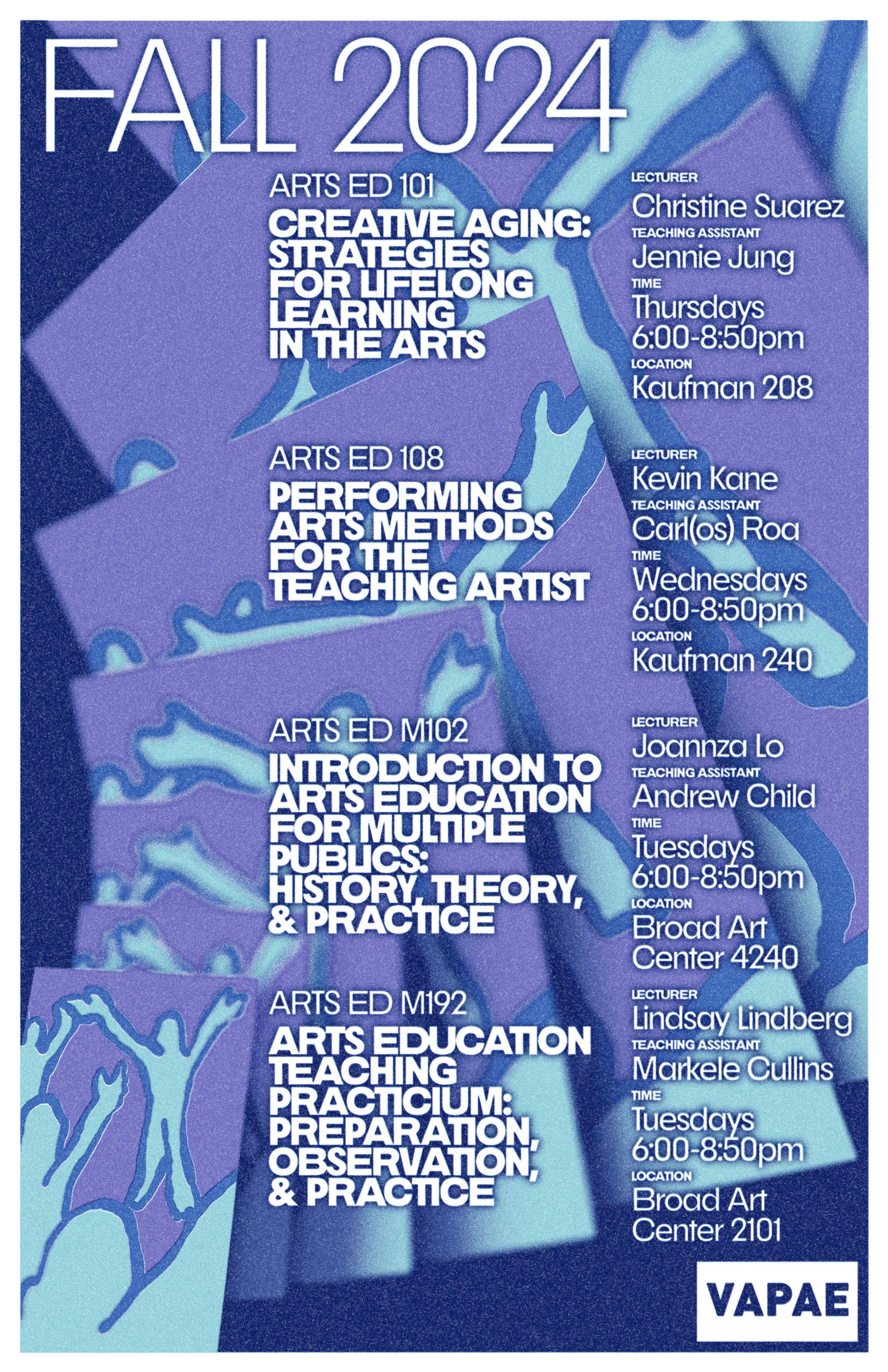
![CoursesS2024_poster_print[14].jpg](https://images.squarespace-cdn.com/content/v1/65a8480c86c9df00dc82fdda/3f45745b-2a5b-44be-bf8f-8032f5efbaa0/CoursesS2024_poster_print%5B14%5D.jpg)



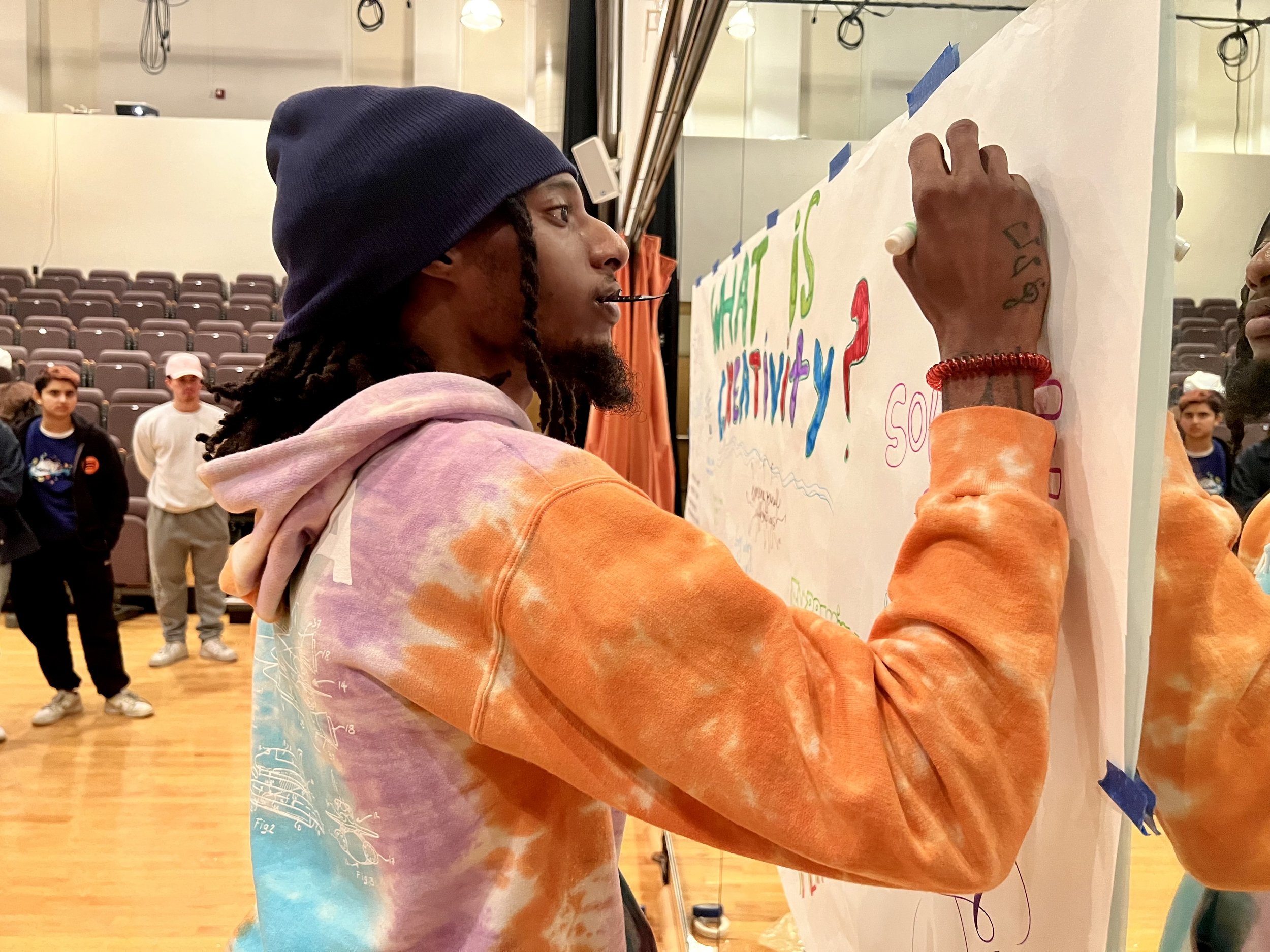
Arts Ed 20 final class poster session
Arts Ed 105 student
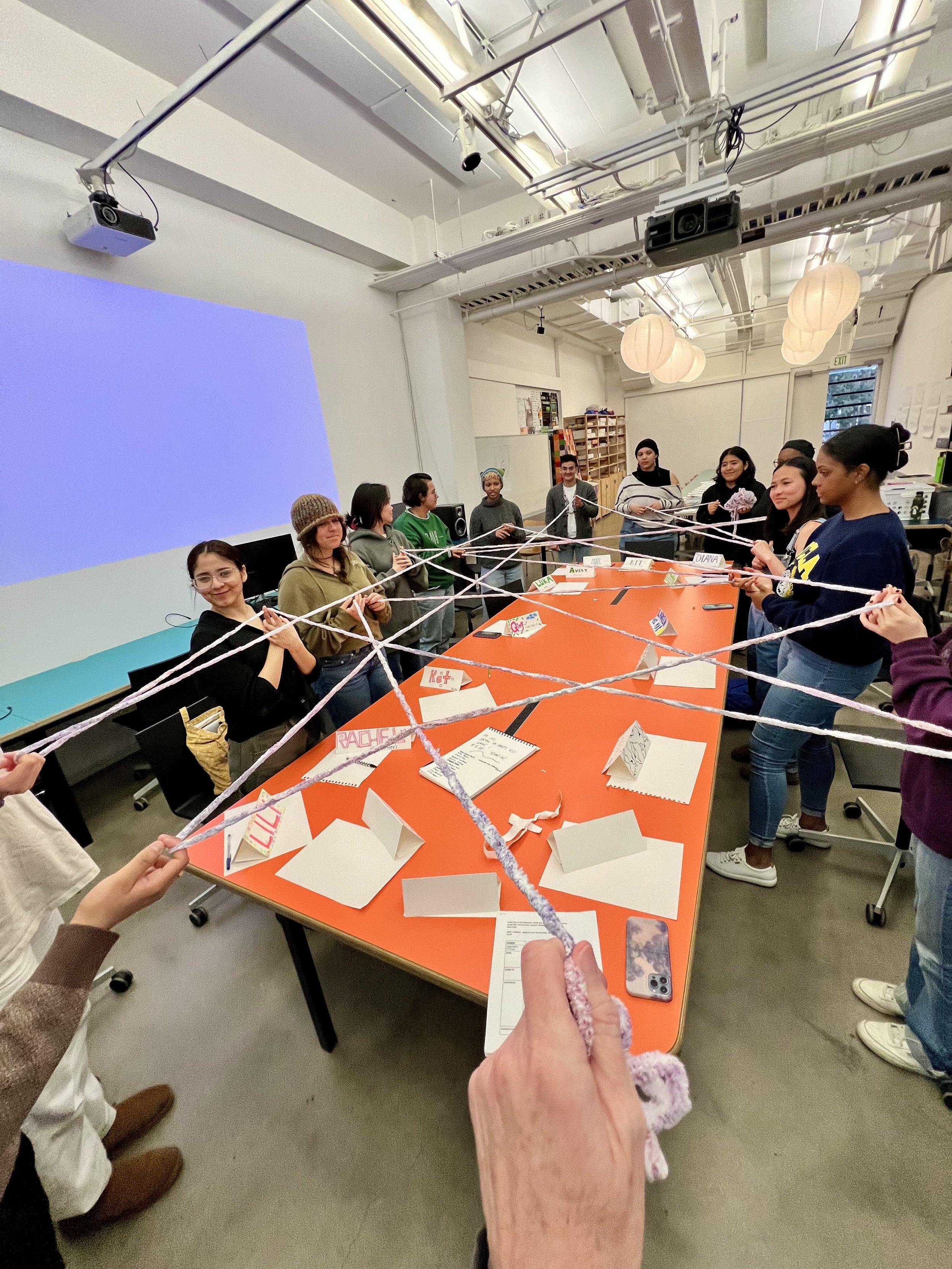
Name game in Arts Ed M102
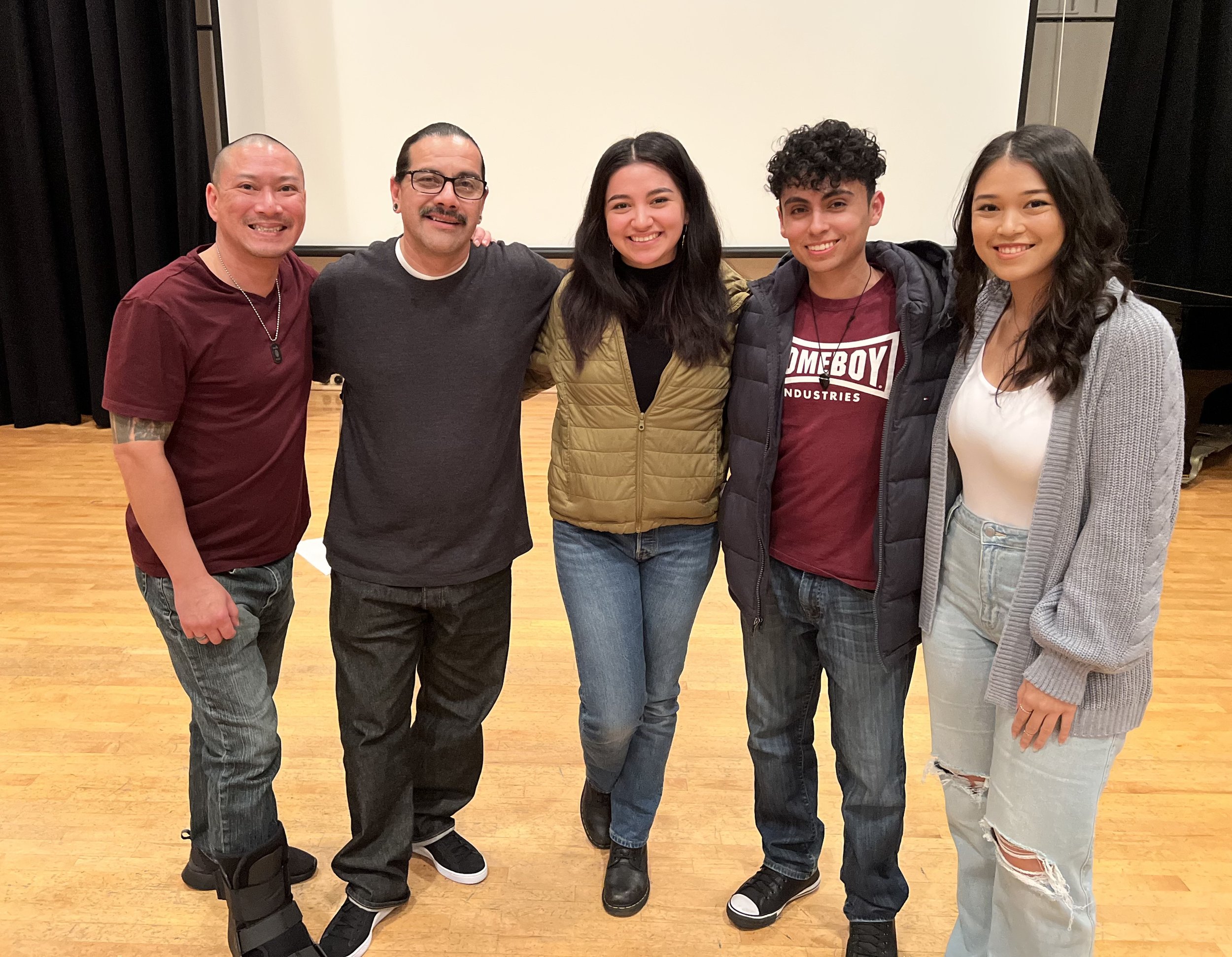
Guest speakers in Arts Ed 105: Arts Programs in Correctional Institutions with lecturer Jimmy Wu
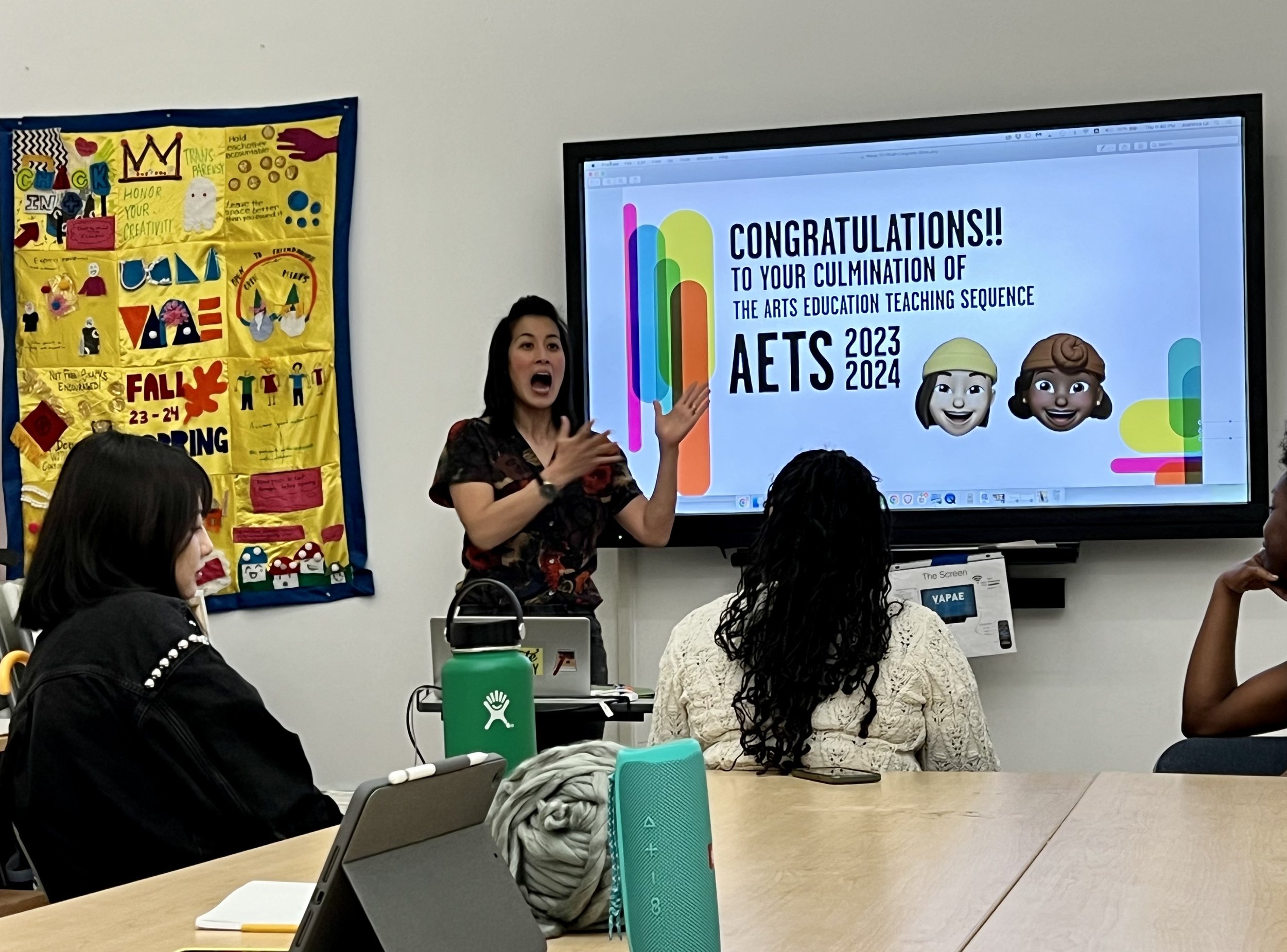
Culminating session of the Arts Education Teaching Sequence with lecturer Joannza Lo